 Want to live longer? Research from the University of Sydney in Australia suggest that small changes to your sleep, physical activity and nutrition can have an impact on both your lifespan and healthspan.
Background
In this study, over 59,000 male and female adults living in the UK wore a wrist accelerometer which tracked their sleep and moderate to vigorous physical activity for 7 days.
Studies typically collect self-reported information about sleep and physical activity. This was the first study to measure these factors using an external device which may be more accurate. Nutrition was still measured with a questionnaire about the participants’ self-reported intake of vegetables, fruits, grains, meats, fish, dairy, oils and sugar-sweetened beverages.
Researchers measured the participants’ health for 8 years and wanted to find the minimum amount of sleep, physical activity and nutrition needed to have a benefit on lifespan and healthspan.
Lifespan is defined as the total number of years a person lives whereas healthspan is the number of years that a person lives in good health, free from chronic illnesses such as cardiovascular disease, cancer and dementia.
What the study found
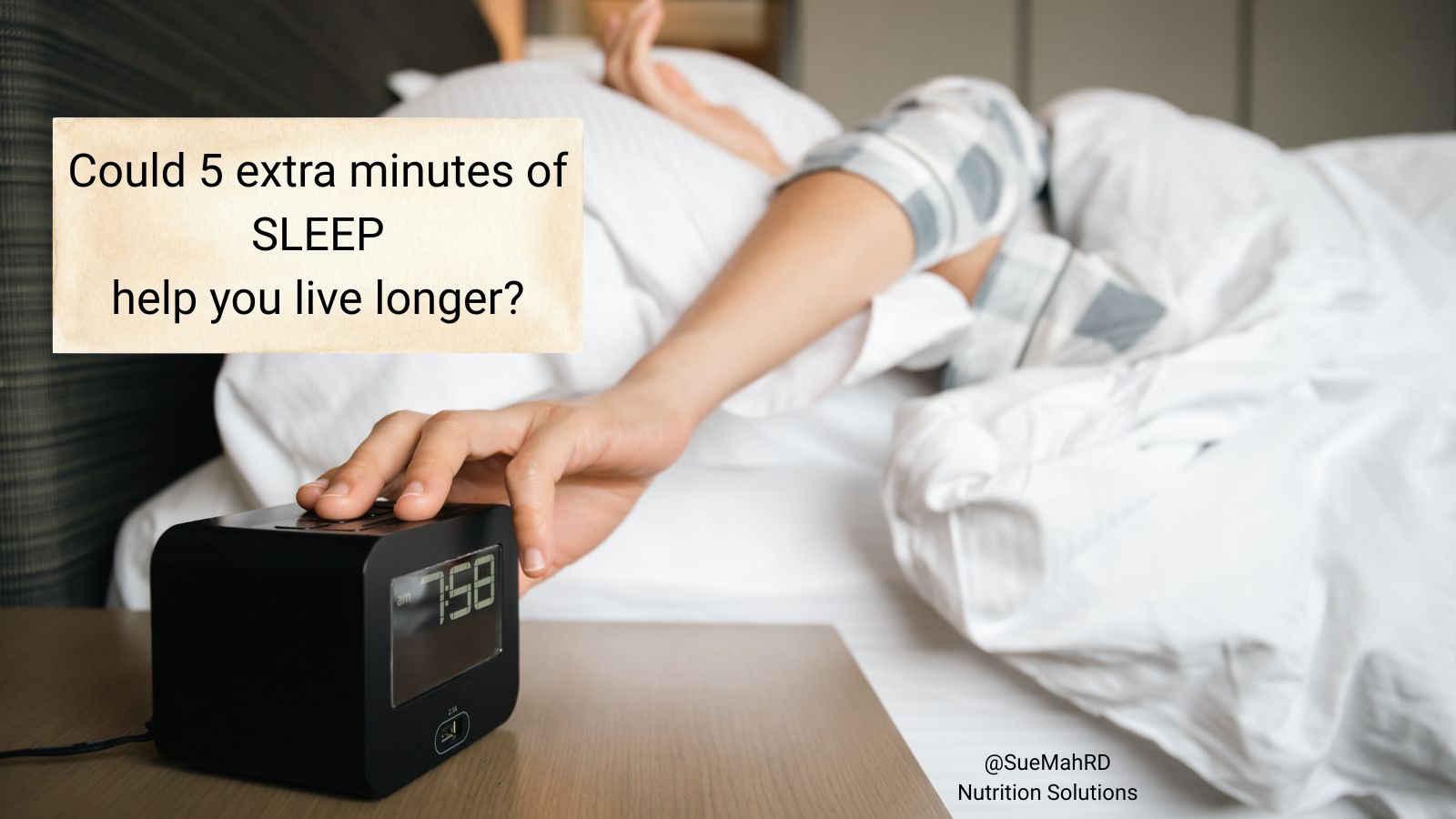
The researchers used a baseline of 5.5 hours of sleep a day, 7.3 minutes of physical activity a day, and below average eating habits. From this baseline, getting 5 extra minutes of sleep per day AND an extra 2 minutes of moderate-vigorous physical activity per day AND eating just an extra ½ serving of veggies a day (or an extra 1½ servings of whole grains a day) was associated with 1 extra year of lifespan. All of these extra behaviours needed to be done every day.
Compared to the baseline, healthspan appeared to increase by 4 years when participants did all of the following: slept 24 extra minutes a day, was physically active for 4 extra minutes a day, ate 1 extra cup of veggies, ate 1 extra serving of whole grains, and ate 2 servings of fish per week.
The most optimal combination was getting 7.2-8 hours of sleep per day, more than 42 minutes of daily moderate-vigorous physical activity along with eating a high quality diet. This lifestyle pattern was associated with an extra 9 years of lifespan and another 9.5 years of healthspan.
Limitation of this study
While this study is interesting, there are a few things to question.
- The wrist device was only worn for 7 days. Is that long enough to get an accurate reflection of sleep and physical activity habits?
- The nutrition data was collected 3-9 years before the sleep and physical activity data. Could the participant’s nutrition intake have changed over the 5 years (I would guess yes!) and if so, how would this have changed the results?
- The researchers followed the participants’ lifespan and health status for 8 years. Is that long enough for a chronic condition to develop?
The researchers also acknowledge that these results are estimated theoretical extrapolations from the data and are not direct observations or direct causes.
How you can use this info
There’s no doubt that sleep, physical activity and good nutrition are important pillars to a healthy lifestyle. Many studies typically look at each of these pillars separately. This study was different in that it looked at how changes to sleep, physical activity and nutrition may work together to potentially delay the onset of chronic disease and increase lifespan. The study tried to find a minimum amount of these healthy behaviours that could have a benefit.
Here’s my advice. Go ahead and hit the snooze button, but don’t use this data as an exact mathematical formula for longevity and health. Instead, it’s your overall lifestyle habits that matter. Aim to get more regular and restorative sleep. Find enjoyable ways to be active every day. Manage stress. Don’t smoke. Go easy on alcohol. And nourish your body by eating nutritious, delicious, wholesome foods.
Reference
Koemel NA, Biswas RK, Ahmadi MN et al. Minimum combined sleep, physical activity and nutrition variations associated with lifespan and healthspan improvements: a population cohort study. eClinicalMedicine, 103741 doi: 10.1016/j.eclinm.2025.103741