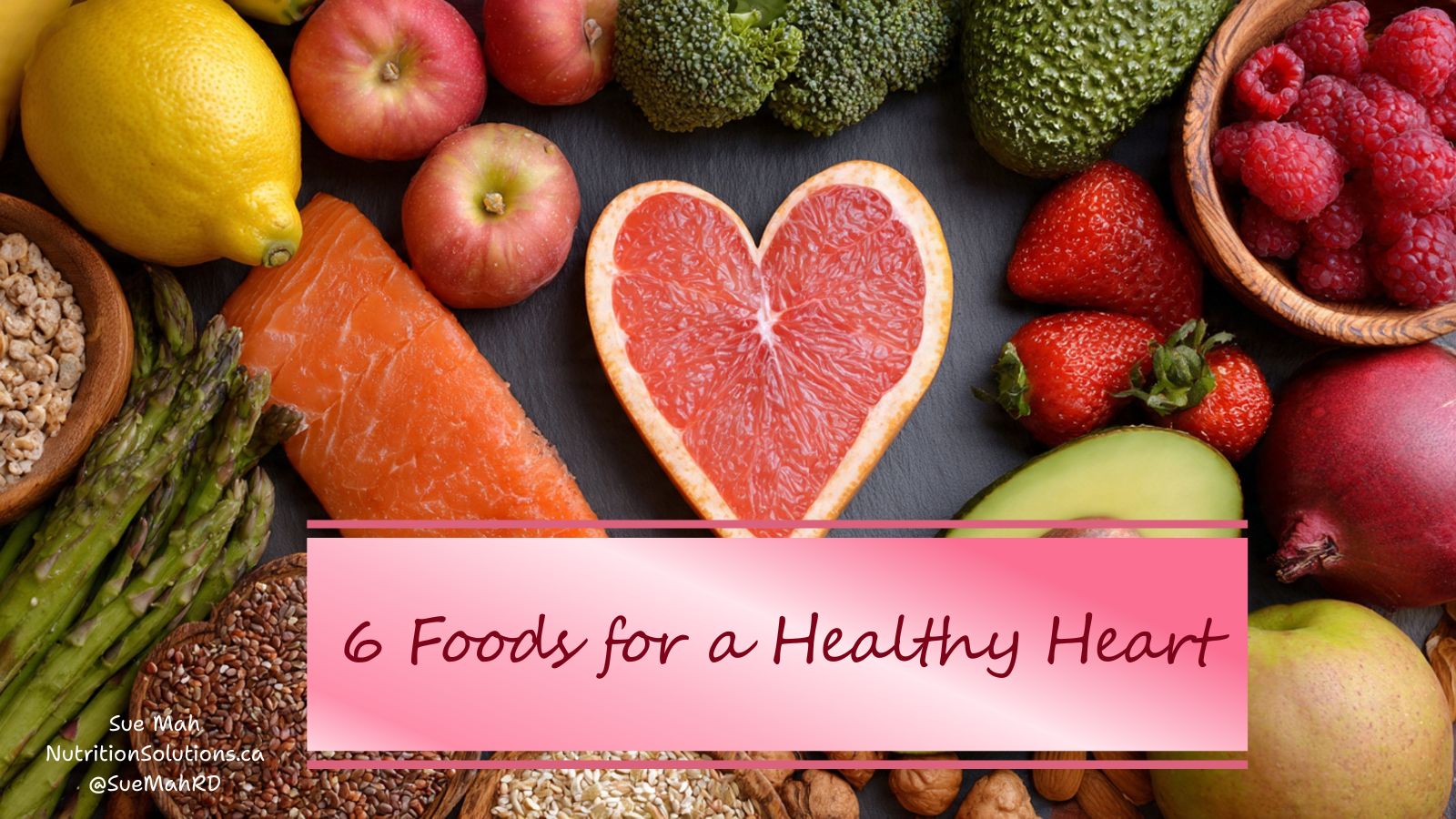
 February is Heart Month! According to the Heart and Stroke Foundation of Canada, 9 out of 10 adults have at least one risk factor for heart disease. The good news is that eating the right foods can keep your heart healthy.
Whole grains
Barley and oats specifically contain a special type of fibre called beta-glucan. This type of fibre has been shown to lower blood cholesterol which is important since high blood cholesterol is a risk factor for heart disease. The beneficial amount is 3 grams of beta-glucan fibre which is found in 1 cup of cooked barley or 1½ cups of cooked oatmeal.
Try these recipes:
Nuts
Research shows that eating about 1.5 to 3.5 servings of nuts 5 times or more per week can also lower the bad LDL (low density lipoprotein) cholesterol. All nuts have high proportions of healthy fats – these are called monounsaturated and polyunsaturated fats – and it’s these fats which help to reduce our cholesterol levels. Nuts are packed with nutrition like protein, vitamin E, selenium, folate and even calcium but the calories do add up, so keep in mind that a portion size is about ¼ to 1/2 cup. One easy way to eat more nuts is to eat them as a snack. Or you can easily add nuts to your oatmeal, in your baking recipes or in a stir-fry.
Beans
Plant-based foods such as beans can boost heart health. Beans are low in fat, packed with fibre and a great protein option. A serving is only 1/2 cup of cooked beans. Enjoy them in soups, salads, and wraps.
Try this recipe: Black Bean, Corn and Avocado Salad
Soy protein
About 20-25 grams of soy protein helps to lower blood cholesterol levels. Plus soy protein is a great vegetarian protein. To get this amount of soy protein, try any one of these options:
– ¾ cup cooked tofu or
– ¾ cup cooked edamame beans or
– 1 cup fortified soy beverage with ¼ cup roasted soy nuts
Fish
Fatty fish such as salmon, rainbow trout, artic char, mackerel and sardines are super sources of heart healthy omega-3 fats. These omega-3 fats can reduce inflammation and blood clotting. Aim to fish at least twice a week. A serving is 75 g of cooked fish or about the size and thickness of your palm.
Try this recipe: Salmon Chowder
Veggies and Fruit
You can’t go wrong eating more fruit and veggies. Fruit and veggies are superstars for fibre, vitamins, minerals and antioxidants which protect us from not just heart disease but other health conditions too such as high blood pressure, cancer and diabetes. As a general rule, try to have 1-2 servings of veggies or fruit at every meal and snack. Or just think of filling half your plate with veggies and fruit at every meal!
Try this recipe: Sautéed Mushroom and Spinach Salad
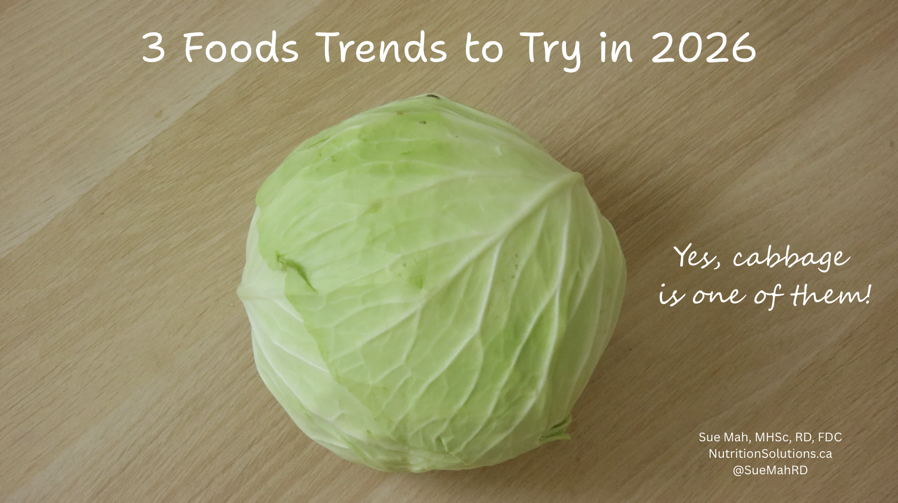 Each year, there are so many predictions for what we will be buying and eating. Here are 3 food trends that caught my eye!