Blog / Recipes

Ask a Dietitian: What’s the difference between INTACT grains and WHOLE grains?

A loaf of whole grain bread

You’ve probably heard of whole grains – they include all three parts of the grain (bran, endosperm, germ) and are linked to health benefits such as a lower risk of type 2 diabetes and heart disease. 

Intact grains are whole grains that have not been processed. Now, I want to stress that “processed” is not a bad word. Whole grains can be processed by milling the grain into some flour to make other foods (such as whole wheat bread) or by steaming and rolling the grain into thinner pieces so that they cook faster (such as rolled oats or instant oats).

Here are a few examples of intact grains and whole grains.

Wheat berries are an intact grain.  They have not been processed.

Bulgur is a whole grain. It’s made by boiling, drying and then cracking the wheat berries. This processing speeds up the cooking time of bulgur.

Whole wheat bread is a whole grain. It’s made by milling the wheat berries into flour used to make the bread.
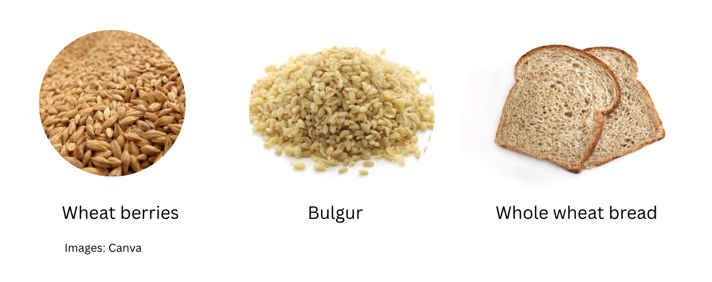
Wheat berries, bulgur and whole wheat bread


Oat groats (also called oat kernels) are an intact grain. They have not been processed, milled or cut.

Steel cut oats are a whole grain. They’re minimally processed oat groats that have been cut into 2-3 pieces with a steel blade.

Old-fashioned rolled oats are a whole grain. They’re made by steaming the oat groats and then rolling them into large flakes.

Instant oats are a whole grain. The groats are steamed the longest and rolled out the thinnest, making them the fastest to cook.
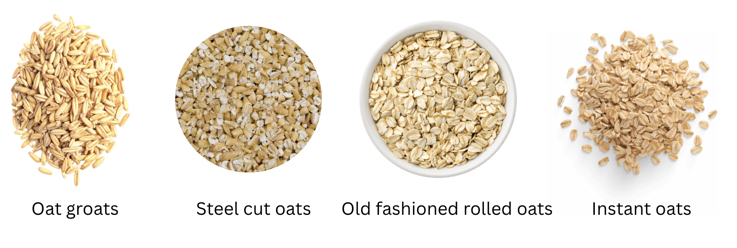
Different types of oats

Other examples of  intact grains are amaranth, buckwheat, farro and quinoa.

Both whole grains and intact grains provide excellent nutrition. Intact grains can take longer to cook but may have a slight health advantage. For example, research shows that blood sugar levels were lower after eating intact oats compared to very thinly cut oats.

The bottom line: Whole grains and intact grains are nutritious and versatile. Eat a variety of whole grains and intact grains every day! Here are a few simple ideas:

  1. Have a bowl of oatmeal for breakfast.
  2. Make a tabbouleh salad with bulgur.
  3. Add a handful of quinoa to your favourite salad.
  4. Try soba noodles (buckwheat noodles).
  5. Make a sandwich on whole wheat bread.

 

References:
– Jones, JM & Engleson, J., International Journal of Food Sciences and Nutrition. 2020 Sep;71(6):668-677. Whole grain consumption and human health: an umbrella review of observational studies.  doi: 10.1080/09637486.2020.1715354.
– Musa-Veloso K. et al. Journal of Nutrition. 2021 Feb 1;151(2):341-351.  A Systematic Review and Meta-Analysis of Randomized Controlled Trials on the Effects of Oats and Oat Processing on Postprandial Blood Glucose and Insulin Responses. doi: 10.1093/jn/nxaa349.


Should You Be Worried About Lectins?

Beans_

I love eating different grains and beans. In fact, one of my favourite meals is lentils and rice. But there’s a growing buzz about lectins in these foods. Are lectins the new gluten? Here are 5 things you need to know.

1. Lectins are a family of proteins that bind to carbohydrates. Lectins are found in all foods, but are most concentrated in legumes and grains. Uncooked, raw legumes such as red and white kidney beans are one of the biggest sources of lectins. Lectins help protect plants from attacks by pests and insects.

2. Lectins aren’t easily digested, so they pass through the stomach and into the gut where they may “stick” to the gut wall. Eating high amounts of lectins may damage the lining of the gut, potentially causing digestive issues. For example, eating RAW or undercooked or improperly cooked kidney beans can lead to vomiting, diarrhea and abdominal pain.

3. Some people, such as those with Crohn’s disease or inflammatory bowel syndrome, may be more sensitive to lectins. If you have these conditions, speak to a Registered Dietitian to determine the amount of lectins that will minimize any symptoms or flare-ups.

4. Cooking eliminates almost all of the lectins in foods. Boiling legumes and grains in water for example is an easy way to get rid of lectins. Soaking beans, sprouting seeds and grains, and fermenting foods are other ways to lower the lectin content of foods. Canned beans have very low lectin levels due to the canning process.

5. Remember that many lectin-containing foods also provide important nutrients. Grains offer B vitamins, iron and fibre. Legumes offer protein, fibre, iron and zinc. So don’t worry about lectins. Instead, cook your grains and legumes, and enjoy!