Blog / Recipes

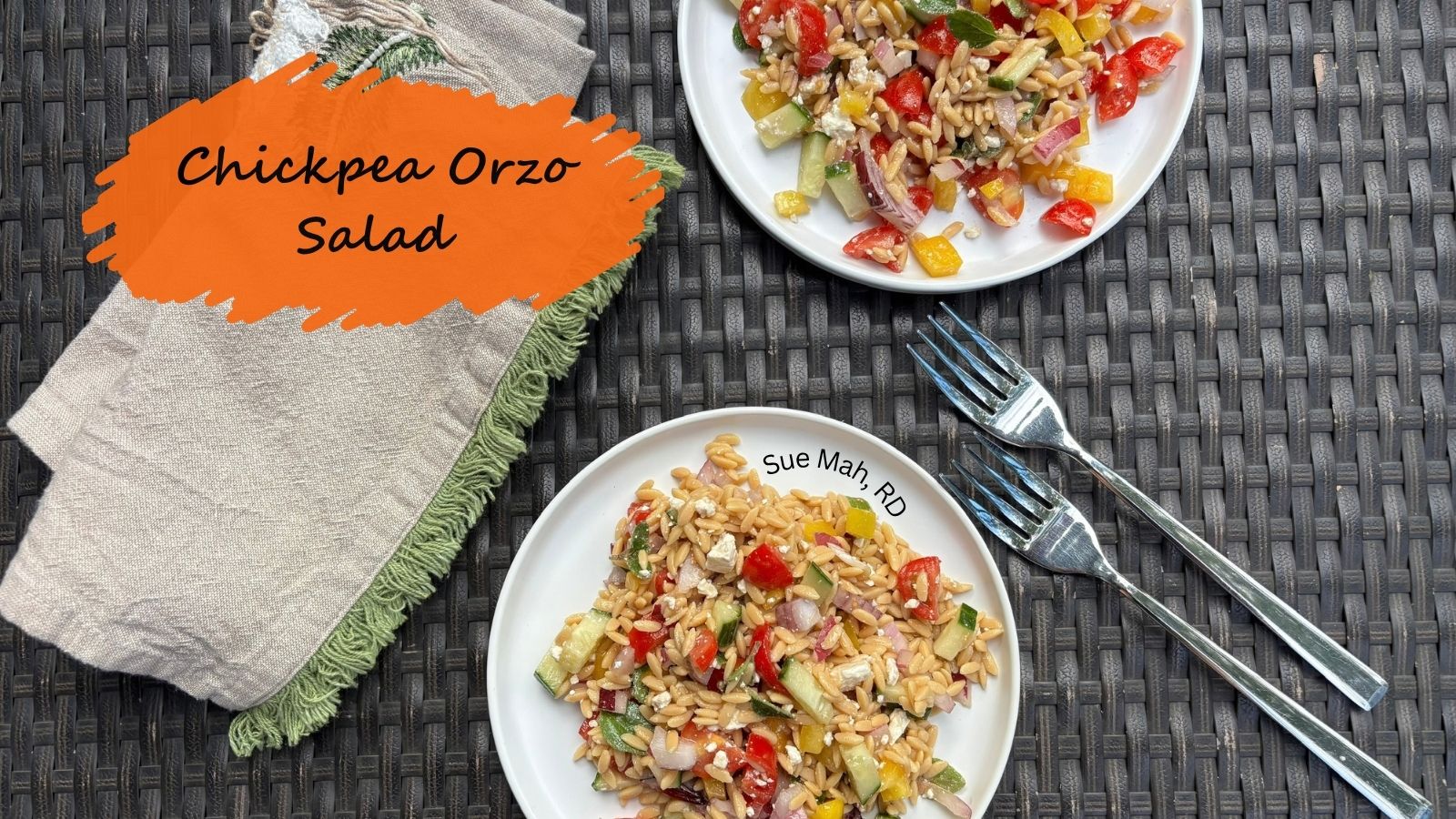
Chickpea Orzo Salad

Chickpea Orzo Salad

This isn't your ordinary orzo salad! It uses orzo made from chickpea flour which has 3 times more fibre and over 1.5 times more protein than regular orzo. Give it a try!
Course Dinner, Lunch
Cuisine Mediterranean

Ingredients
  

Salad

  • 1 cup cooked chickpea orzo (about 1/3 of the sample product package shown below, or use about 85 g or 3 oz of dry chickpea orzo)
  • 1/2 English cucumber, diced
  • 1 cup cherry or grape tomatoes, halved
  • 1/2 yellow pepper, diced
  • 1/2 small red onion, diced
  • 1/4 to 1/2 cup feta cheese, crumbled

Salad Dressing

  • 3 Tbsp olive oil
  • 1 Tbsp balsamic vinegar
  • salt and pepper to taste

Instructions
 

  • Cook chickpea orzo according to package directions. (Or bring a large pot of lightly salted water to boil. Add chickpea orzo and stir. Cook stirring occasionally for about 10 minutes or until desired firmness. Drain.)
  • In a large bowl, add cooked chickpea orzo, cucumber, tomatoes, pepper, red onion and feta cheese.
  • Whisk together salad dressing ingredients. Pour over salad and gently toss.
  • (For extra protein, add a can of beans, canned fish or grilled chicken / meat.)

Notes
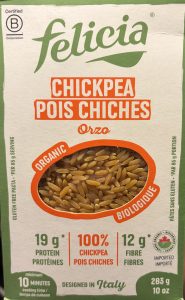
This is the chickpea orzo that I used for the recipe. I found it at Healthy Planet (#NotSponsored). It contains 12 g fibre and 19 g protein in 1/3 of the package uncooked (about 1 cup cooked). 
Keyword chickpea orzo, orzo, orzo salad

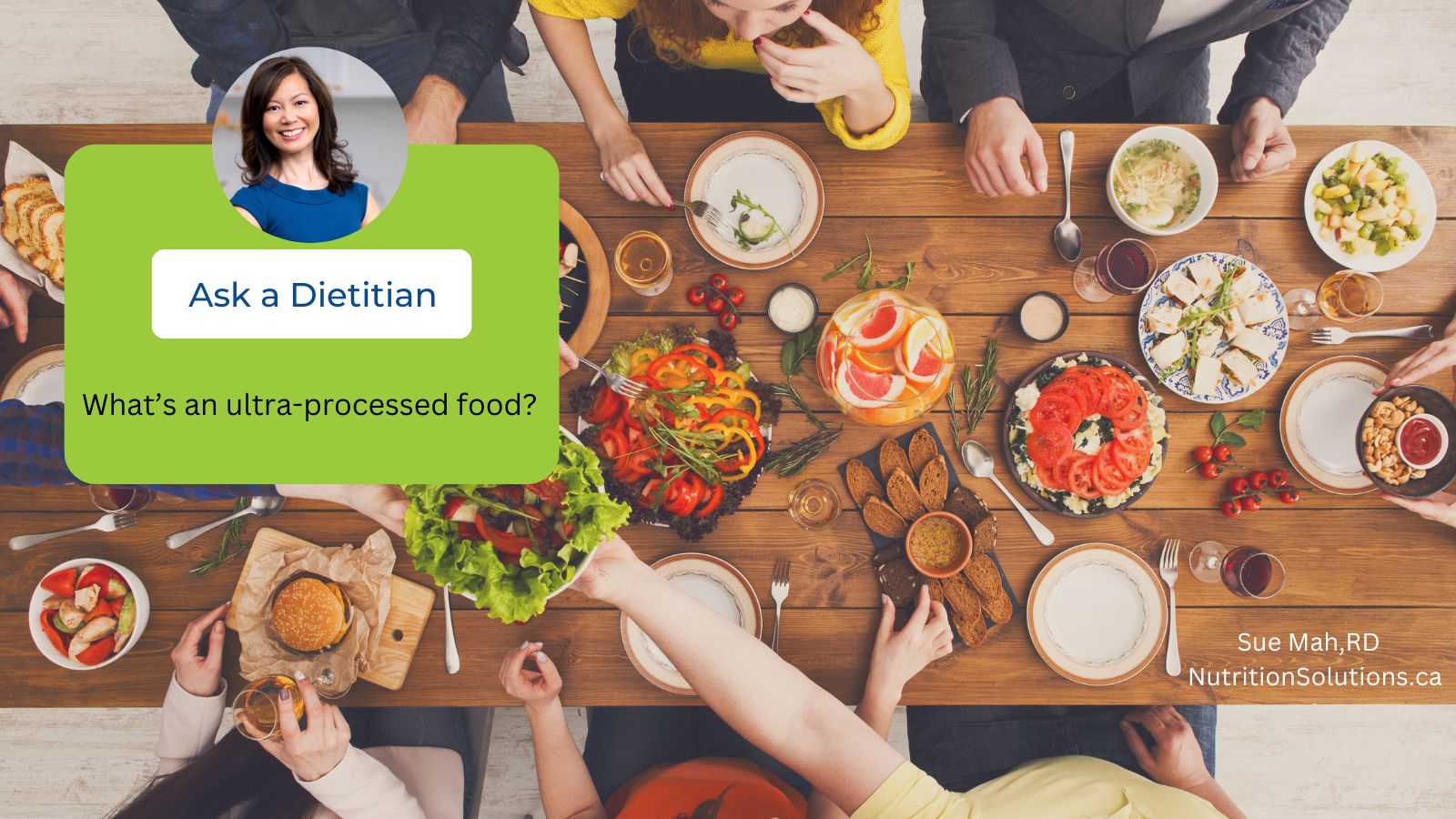
Ask a Dietitian: What’s an ultra-processed food?

When you hear the term “processed” or “ultra-processed”, you may automatically think of foods that come in a box or package. There’s more to these terms though. Scientists at the School of Public Health at the University of Sao Paulo in Brazil developed a classification system called NOVA (it’s not an acronym) that groups foods into 4 different categories depending on the extent of the processing. Let’s go through each of them.
Unprocessed or Minimally Processed Foods: 

Unprocessed foods have not undergone any changes whatsoever. Some examples are fresh fruit and veggies as well as plain unseasoned fish and meats. Minimally processed foods are essentially unprocessed foods that have been cleaned, dried, ground, pasteurized, fermented or frozen. No oils, fats, sugars, salt or other substances have been added to the original food. Dried fruit, frozen veggies, dried beans, dried herbs and ground spices are just a few examples of minimally processed foods. Both unprocessed and minimally processed foods should form the foundation of a healthy, balanced diet.

Processed Culinary Ingredients: 

These are oils, fats, salt and sugars. These ingredients have been extracted from whole foods using processes such as pressing, grinding, refining and crushing. Vegetable oils for example are made from crushed seeds, nuts and fruit. Table sugar and molasses are obtained from sugarcane or sugar beet. Maple syrup is extracted from maple trees, and sea salt is mined from sea water. 

Processed Foods:

These are unprocessed foods with added oils, fats, salt or sugars. Most processed foods have just 2 or 3 ingredients. Some examples are salted nuts, smoked fish, fruit packed in syrup, pickled veggies, and homemade / bakery-made bread. These foods can still be enjoyed as part of an overall healthy diet. 

Ultra-processed Foods:

Most ready-to-eat and ready-to-heat products would be considered as ultra-processed foods. These are foods that are made by a series of processes and have extra ingredients such as additives, colours, flavours, emulsifiers, thickeners. Some examples are cake mixes, packaged pasta dishes, frozen entrées, reconstituted meat products and seasoned packaged snacks. While these foods can be convenient, enjoy them occasionally and in sensible amounts.