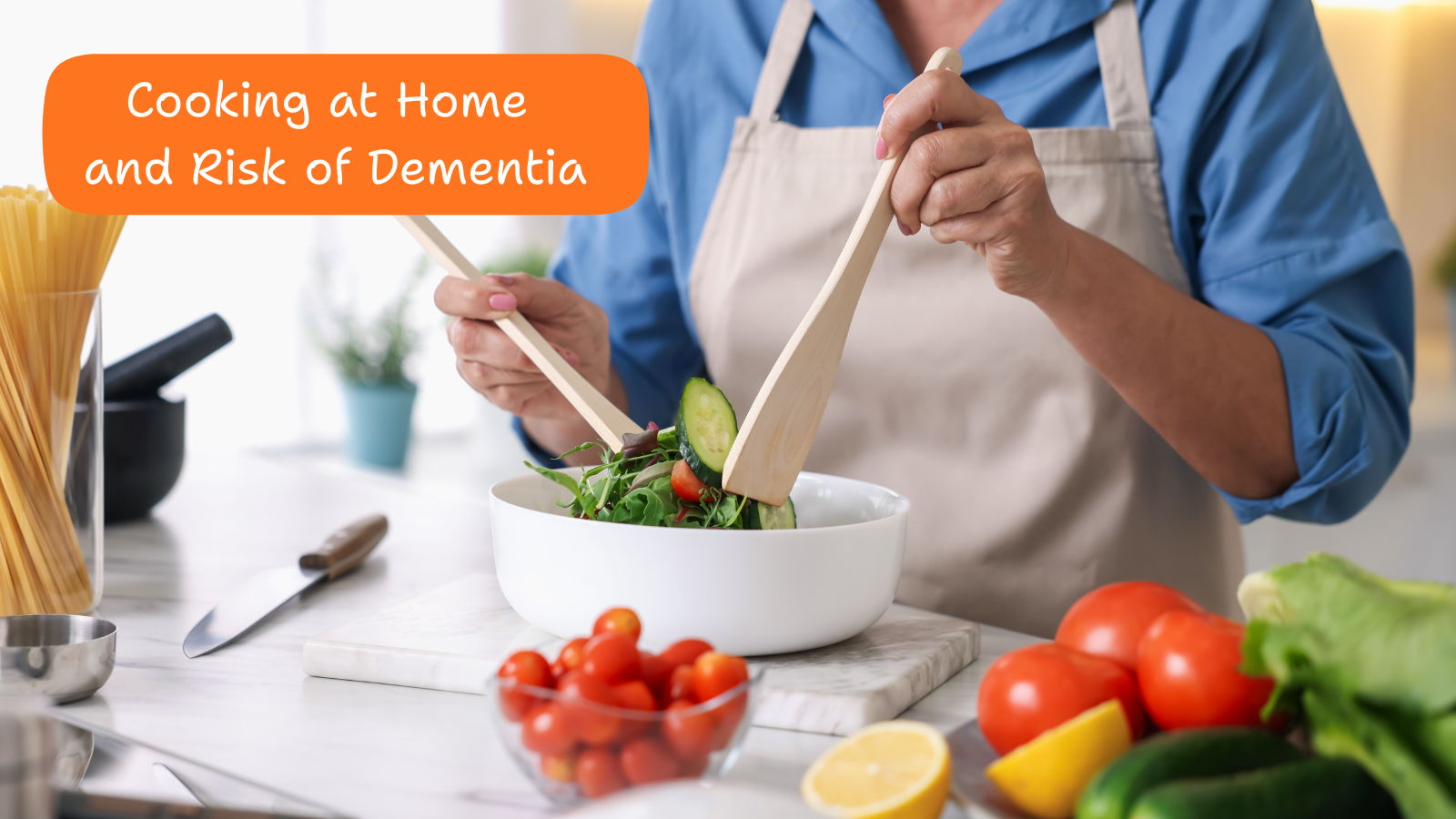
 Cooking at home has many benefits, such as a lower risk of developing diabetes, eating fewer calories and eating more nutritious foods. But could cooking at home decrease your chances of developing dementia?
Background
Researchers in Japan looked at whether cooking at home affects a person’s chances of developing dementia. The study spanned 6 years from 2016 to 2012, and reviewed almost 11,000 older adults over the age of 65 years who were originally part of a study called the Japan Gerontological Evaluation Study (JAGES). More than half of the participants were retired, half were female, and 20% of the adults were over 80 years or age.
The participants received a questionnaire and were asked to rate their own cooking skills (from unable to very well), and were also asked how often they cooked from scratch every week (from never up to 5x per week.) Long term care health data from home assessments and medical exams were used to assess participants’ cognitive impairment status.
What the study found
About 50% of the participants cooked at least 5 times a week while over 25% did not. Women tended to cook more often than men. Those with higher cooking skills cooked more often than people with low cooking skills.
Overall, cooking at least once a week was associated with a 23% lower risk of dementia in older men and 27% lower risk in older women. The benefit was even higher for people who were novice cooks with lower cooking skills.
Limitations of the study
This study is not direct proof that home cooking prevents dementia. Instead, the research only shows that there could be a link or association between home cooking and a person’s risk of developing dementia.
The study involved older adults who live in Japan and so the results may not apply to other communities. The lifestyle, social and cultural habits of Japanese seniors may be different from your’s. For example, the types of food and how it is cooked varies from culture to culture.
How you can use this information
According to the Alzheimer Society of Canada, there are many risk factors for dementia such as: age, gender, genetics, depression, traumatic brain injury, hearing loss, social isolation, lack of physical activity and poor diet.
While this study doesn’t directly prove that cooking reduces the risk of dementia, there are still many benefits to cooking at home. It’s a task that provides opportunities for cognitive stimulation and physical activity. For example, meal planning consists of thinking about menus, required ingredients, budget, best-before dates and cooking methods. Trying new recipes can also challenge the brain. Shopping for ingredients as well as chopping ingredients and cleaning are active physical tasks for older adults.
If you can, try to cook meals at least once a week. Look for new recipes and experiment with new ingredients. Invite a few friends over to cook and eat with you. Have fun!
References: