 Each year, there are so many predictions for what we will be buying and eating. Here are 3 food trends that caught my eye!
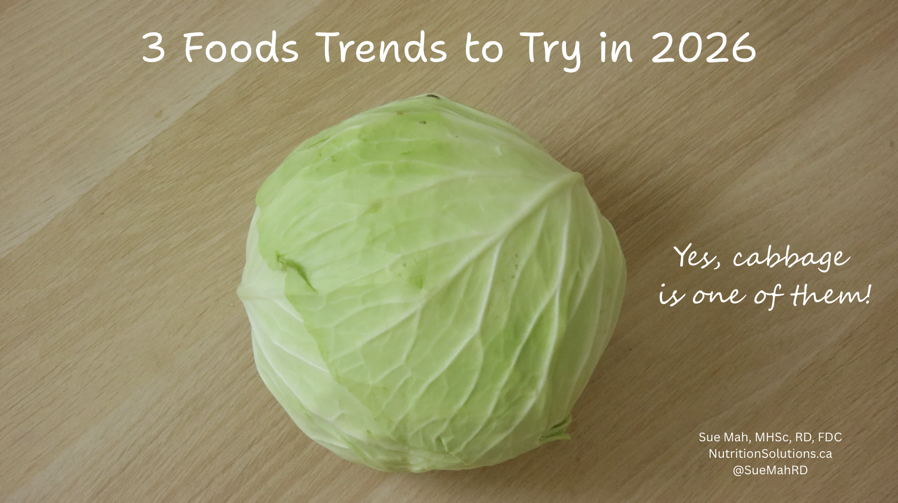
Cabbage
Remember the cauliflower craze years ago? Who could forget cauliflower rice, cauliflower pizza crust and cauliflower steak? Well, this year’s star veggie is another humble member of the cruciferous family – cabbage!
Termed the “Cabbage Crush”, Pinterest found that searches for cabbage dumplings soared 110% and searches for Polish golombki cabbage soup were up by 95%!
There are actually different types of cabbage to try:
- Green cabbage – often used in coleslaw, sauerkraut and cabbage rolls
- Red / purple cabbage – can be used in coleslaw and salads
- Napa cabbage – has sweet, tender leaves and commonly used to make kimchi
- Savoy cabbage – has dark green, crinkly leaves and can be used for cabbage rolls too
- Bok choy – is a type of Chinese cabbage and wonderful in stir-fry recipes
- Brussels sprouts – they really do look like mini cabbages – try them roasted!
Packed with vitamin C, vitamin K and folate, cabbage is budget friendly and quite versatile. I’ve always wanted to make cabbage rolls from scratch and now I’m super motivated!
Hojicha
According to the Food Network, hojicha is the beverage trend of the year. Hojicha is a type of Japanese green tea made from charcoal-roasted green tea leaves.
I quite enjoy matcha green tea and wondered how it differs from hojicha. Here’s a quick comparison.
- How it’s made: Matcha is made by grinding green tea leaves into a fine powder. Hojicha is made by roasting the green tea leaves, stems and stalks first before grinding them into a powder. Hojicha may also be a loose leaf tea.
- Colour: Matcha is a vibrant green colour. Hojicha is a reddish-brown colour.
- Taste: Matcha is grassy and sweet. (Low quality matcha can be bitter.) Hojicha is earthy with a nutty flavour.
- Caffeine content: Matcha green tea has slightly more caffeine than hojicha – about 50 grams of caffeine in a cup of matcha versus about 7 grams in a cup of hojicha. Both types of tea have much less caffeine than coffee which comes in at about 100 grams per cup.
All types of green tea naturally contain an amino acid called L-theanine which can have a calming, comforting and soothing effect. I look forward to trying hojicha in a latte!
“Fricy” Flavours
You’ve already heard of “swicy” (sweet plus spicy) and ingredients like hot honey and chili chocolate. “Fricy” is a mash up of fruity plus spicy!
Trend setters say that this new flavour combo will be showing up in food products and restaurant menus. For example, chamoy is a Mexican condiment made from a tangy mix of pickled fruit like apricots, plums or mangos, plus lime juice and dried chili peppers. Chamoy can be used as a glaze or marinade for meat, or even drizzled over nachos. Similarly, yuzu kosho is a fermented Japanese seasoning made from yuzu peel and chili peppers.
I’ll be looking for these flavourings at an international grocery store. In the meantime, I’ll try adding some chili flakes to a fresh fruit salad and see how it tastes!

 With summer on the horizon, beverages are trending again, especially coffee beverages. Do you remember the Dalgona Coffee craze back in 2020? Now, Coconut Cloud Coffee is taking over social media.