Blog / Recipes

Research recap: Eating cruciferous veggies lowers blood pressure

A bowl with broccoli and Brussels sprouts

A recent article published in the journal BMC Medicine found that eating cruciferous veggies such as broccoli and cauliflower are better than root veggies when it comes to lowering your blood pressure. Here’s what you need to know about the study.

Background

Scientists from the Nutrition and Health Innovation Research Institute at Edith Cowan University in Australia recruited 18 adults aged 56 to 72 years who had mildly high blood pressure (systolic blood pressure of 120-150 mmHg).

The participants were divided into two groups. Group A received soups for their lunch and dinner meals made with a total of 300 grams (about 4 servings) of cruciferous vegetables such as broccoli, cabbage, cauliflower and kale. Group B also received soups for their lunch and dinner meals, but these were made with 300 grams of root vegetables like carrots, potatoes, sweet potatoes and pumpkin. Both groups ate these soups (without adding any extra salt) for two weeks in addition to their usual breakfast and snacks.

The participants then went back to their usual diets for two weeks and then the researchers switched the soups. So Group A now received the root vegetable soup for two weeks and Group B received the cruciferous vegetable soup for two weeks. The participants’ blood pressure was measured several times every day throughout the study.

What the study found

The study found that eating about four servings of cruciferous veggies every day significantly lowers systolic blood pressure by 2.5 mmHg. While this seems like a small impact, it actually translates to a 5% lower risk of heart disease!

The bottom line

One limitation of the study is that it involved a very small number of participants which were predominantly Caucasian females. However, it was the only study in humans to show improvements in blood pressure after eating cruciferous veggies for just a short period of time. This beneficial effect may be due to special compounds called glucosinolates which are only found in cruciferous vegetables.

Since high blood pressure is a leading risk factor for heart disease, it’s a good idea to include cruciferous veggies regularly in your meals. There are lots to choose from: arugula, bok choy, broccoli, Brussels sprouts, cabbage, cauliflower, collard greens, horseradish, kale, radish, turnips and watercress.

Here are a few recipes you can try:

Beet Salad with Goat Cheese and Arugula

Beef & Bok Choy Stir-fry

Roasted Brussels Sprouts

Quinoa Salad with Beets, Oranges and Arugula


Sautéed Mushroom and Spinach Salad


A white bowl filled with spinach, mushrooms and red onion.

Sautéed Mushroom and Spinach Salad

A simple yet flavourful salad! Enjoy as a side dish or add your favourite protein to make it a meal!
Course Salad
Servings 4

Ingredients
  

  • 2 tsp canola oil
  • 6 cups baby spinach (washed and dried, if needed)
  • 227 grams button or cremini mushrooms, sliced (about 10 large mushrooms)
  • 1/2 small red onion, thinly sliced
  • salt and pepper to taste
  • 1 1/2 tbsp olive oil
  • 1 tbsp balsamic vinegar

Instructions
 

  • In a large skillet, heat oil on medium-high heat.
  • Sauté mushrooms for about 5-7 minutes until browned, adding salt and pepper halfway through cooking.
  • In a large bowl, add spinach leaves. Toss in mushrooms and onion slices.
  • Mix olive oil and balsamic vinegar together in a small jar. Shake and drizzle over salad just before serving.
  • Option: Add any extra veggies (beets, tomatoes, cucumbers, etc.) you have on hand and sprinkle with feta cheese - delicious!
Keyword spinach, spinach mushroom salad, spinach salad

Plant-based food innovations

Plant-based burgers and nuggets on plates.

According to Statista, 50 to 72% of Canadians say that it’s a positive choice to eat more plant-based foods. Food companies are listening. At this year’s Restaurants Canada show in Toronto, plant-based food innovations were indeed THE biggest trend.

Here are a few of the plant-based foods I spotted at the show.

Ecoideas – Plant-based Chunks

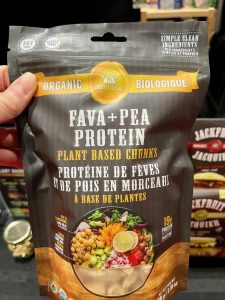
A package of fava and pea protein plant-based chunksThese dried chunks are vegan, gluten-free and made from organic fava and pea protein concentrate. After soaking the chunks in hot water, they’re ready to use in recipes. The company also produces plant-based crumble and jackfruit cubes/shreds.
Nutrition info for 3/4 cup serving: 130 calories, 1.5 g fat, 11 g carbohydrates, 5 g fibre, 1 g sugars, 19 g protein,  0 mg cholesterol, 180 mg sodium, 15% DV potassium, 4% DV calcium, 19% DV iron (DV= Daily Value).


PLANT UP – Plant-based Shawarma Bites

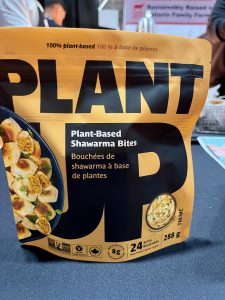
A package of plant based shawarma bitesMade from soy protein and chickpeas, these little bite snacks pack in a blend of Middle Eastern flavourings. The company partnered with chefs around the world to create a range of products including plant-based Asian dumplings, Thai Basil Chik’n, and Butter Chik’n Bites.

Nutrition info for 7 plant-based Shawarma bites: 150 calories, 7 g fat, 24 g carbohydrates, 2 g fibre, 3 g sugars, 8 g protein, 0 mg cholesterol, 420 mg sodium, 1% DV potassium, 2% DV calcium, 19% DV iron (DV = Daily Value).


Plantropy – Jackfruit Pepperoni

A package of jackfruit pepperoni

Jackfruit is a tropical fruit with a meat-like texture. It’s a common ingredient used in plant-based alternatives to meat. Pea protein is added to boost the protein content. The company also offers jackfruit dumplings, nuggets, kebabs and pulled jackfruit.

Nutrition info for 20 pepperoni slices: 180 calories, 14 g fat, 9 g carbohydrates, 2 g fibre, 6 g sugars, 5 g protein, 0 mg cholesterol, 430 mg sodium, 7% DV potassium, 3% DV calcium, 17% DV iron (DV= Daily Value).


Woop 4 – Plant-based Fish

A package of plant-based mahi mahi fish

Made from rice protein, canola oil, flaxseed oil and konjac, this fish alternative requires no cooking. Sweet potato and carrot powder are added to mimic the colour of fish. The product is marked as allergy-free and can be used in sushi, sashimi and poke dishes.

Nutrition info for 125 g serving: 120 calories, 9 g fat, 4 g carbohydrates, 0 g fibre, 1 g sugars, 5 g protein, 0 mg cholesterol, 180 mg sodium, 1% DV potassium, 10% DV calcium, 7% DV iron (DV= Daily Value).


Are you interested in eating plant-based foods? Would you try these products? Let me know in the comments.

This information is for educational purposes only. This is not a sponsored post and not intended to be an endorsement of these products.


What’s OATzempic and does it cause weight loss?

A bowl of oatmeal and oats in the background.


In case you haven’t heard, OATzempic is the latest viral trend on Tik Tok!

It’s a play on words with Ozempic, which is a prescription medication for some people with diabetes that  happens to cause weight loss. OATzempic is a drink made from a cup of water, half a cup of oats and some lime juice. That’s it. And it’s being used by Tik Tok enthusiasts as a quick weight loss drink and meal replacement.

Does OATzempic cause weight loss?

Probably. The truth is that OATzempic only contains about 180 calories, 5 grams of fibre and not much protein. Because it’s likely a lot lower in calories than your typical breakfast or meal, you’re probably going to lose weight simply due to the caloric deficit. The real question is – will this be sustained weight loss, or will you gain the weight back once you stop drinking this concoction?

Sue’s advice

OATzempic doesn’t contain nearly enough nutrition, protein or calories to be used as a meal replacement. The uncooked oats may cause stomach upset and the drink tastes horrible. As usual, the rapid weight loss claim is a red flag. Remember, there is no miracle drink or food for weight loss. Feel good about the food you’re eating and don’t deprive yourself of nutrition or taste. If you’re concerned about your weight, talk to a dietitian or certified intuitive eating counsellor.


Should I eat fruit on an empty stomach?

A background of fruits and veggies

Question: Should I eat fruit on an empty stomach?

Answer: The claim here is that eating fruit with meals slows down digestion and causes the food to sit in your stomach and rot.

It is true that eating fruit with meals can slow down digestion. This is mostly due to the fibre found in fruit, and can actually be beneficial in helping you feel full.

But food does not rot in the stomach. In order for food to rot in the stomach, there needs to be bacteria. Since the stomach is a highly acidic environment, there isn’t a lot of bacteria living there.

The bottom line: There is no need to eat fruit on an empty stomach. Most of us aren’t eating enough fruits (or veggies), so why put extra food rules on yourself. As a dietitian, I say that ANY TIME is a good time to enjoy fruit! Fruit provides key nutrients for good health including folate, vitamin A, vitamin C, potassium, fibre and phytonutrients. For longer lasting energy, pair fruit with protein. Some easy ideas are: apples with peanut butter, grapes with cheese, or berries with nuts.


If you’re overwhelmed by New Year’s resolutions, try this instead

A pad of paper on a desk. The words "New year resolution" are written on the pad of paper.

Happy New Year! For many, the start of a new year can be motivation to kick start some lifestyle changes.

But resolutions can be overwhelming. I actually don’t make resolutions because honestly, it just puts too much pressure on achieving a specific outcome for the entire year. Imagine the stress and self-guilt if you can’t stick to your resolution. Let’s face it – life happens. Things get in the way – time, interest, family issues or other unexpected distractions. In fact, a recent survey by Forbes Health found that most resolutions last only two to three months. Only one percent of those surveyed stated that their resolutions lasted either 11 or 12 months. (1)

So as a registered dietitian, what do I suggest instead? Make a “SMART” goal for the month. The goal should be:

  • Specific
  • Measurable
  • Achievable
  • Relevant
  • Time-bound

For January, here’s my Nutrition Tip of the Month: Eat one green vegetable every day. Here are few ideas to get you started:

  • Add spinach to a smoothie or omelet
  • Serve a salad with lunch or dinner using kale, romaine or arugula
  • Snack on green peppers with your favourite dip
  • Toss broccoli or green peas into a stir-fry or pasta salad or fried rice
  • Roast Brussels sprouts or asparagus

A bowl of fresh greens

The key is to find things which are doable and sustainable for YOU! Over time, this will become a habit and next month, you can set another “smart” goal.

Let me know in the comments how you like to eat your green veggies!


References: (1)  2024 New Year’s Resolutions: Nearly Half Cite Fitness As Their Top Priority.  https://www.forbes.com/health/mind/new-year-resolutions-survey-2024/

Written by: Sue Mah, MHSc, RD, PHEc, FDC – Award-wining dietitian

How can I prevent an E. coli infection at home?

A fully loaded hamburger between two buns.Chances are you’ve heard about the recent E. coli outbreak at daycares across Calgary. E. coli infections can be especially dangerous for kids under the age of 5 as well as those who are pregnant, elderly or who have a weakened immune system.

Here’s what you need to know about E. coli and how you can prevent an infection at home.

What is E. Coli?

E. coli stands for Escherichia coli. It’s a type of bacteria that’s naturally found in the intestines of humans as well as animals including cattle, goats and sheep. While most strains of E. coli are harmless, there is one particular strain called E. coli O157:H7 which can cause serious problems such as stomach cramps, bloody diarrhea, vomiting and kidney damage.

What causes an E. coli infection?

An infection can occur after you eat or drink something that has been contaminated with E. coli, such as:

  • Raw or undercooked beef, especially ground meat: During butchering and processing, E. coli bacteria from cattle’s intestines can get on the outer surfaces of meat. The risk of contamination is greater in ground meat because it combines meat sourced from different animals.
  • Unpasteurized drinks such as raw milk: If E. coli bacteria is present on a cow’s udder or on milking equipment, it may get into raw milk. The heat of pasteurization kills the harmful bacteria.
  • Contaminated produce: When fruits and vegetables are harvested, they may come in contact with contaminated manure or water.
  • Improper food handling: E. coli may be transferred to food products if an infected person’s hands are not washed properly when handling food.
  • Contaminated waters: It’s also possible to become infected with E. coli after drinking contaminated water or swallowing water in swimming pools / lakes that are contaminated with stool.

How to prevent an E. coli infection at home

  1. Cook ground meat to a temperature of 160F (71C): Use a meat thermometer. Don’t judge doneness by colour since meat can turn brown before it is completely cooked.
  1. Drink pasteurized milk, juice and cider: The chances of an E. coli infection are higher in beverages such as raw milk and unpasteurized apple cider.
  1. Wash raw produce: E. coli can cling to produce, especially leafy greens. Wash leafy greens under fresh, cool running water. Keep rinsing until all of the dirt has been washed off. There is no need to wash ready-to-eat, pre-packaged leafy greens that have already been washed / pre-washed / triple-washed.
  1. Avoid cross-contamination: Keep raw foods separate from cooked foods in your grocery cart, at home and when cooking. Don’t use the same knives, utensils, cutting boards and plates to handle cooked foods if they have been in contact with raw meat. Wash equipment and countertops with hot soapy water before and after they come in contact with raw meat. 
  1. Wash your hands often. Wash your hands for at least 20 seconds with soap and water before / during / after food prep, before eating, after using the bathroom and after changing diapers. Remind kids to wash their hands before eating and after using the bathroom too.
  1. Watch for news advisories / recalls related to E. coli outbreaks in food and lakes. You can find a list of food recalls from Health Canada here.

Ask a Dietitian – What’s the latest news about aspartame?


Aspartame is a low-calorie, artificial sweetener that is about 200 times sweeter than white sugar. It’s found in some diet soft drinks, desserts, yogurt, chewing gum and even some chewable vitamins. In Canada, aspartame has been approved for use as a food additive since 1981.

You may have seen recent news headlines about aspartame and cancer. Here’s what you need to know.

Two different groups did two different types of reviews

The health impacts of aspartame were assessed by two different organizations and they looked at two different things.

Review #1 by IARC – International Agency for Research on Cancer

The IARC conducted a HAZARD analysis. This type of review assesses the level of certainty that a substance can cause cancer. It does not consider dose or amount. Aspartame was classified as a Group 2B carcinogen, meaning that it is possibly carcinogenic with “limited evidence in humans and less than sufficient evidence in experimental animals.”

For background, substances classed in Group 1 are considered carcinogenic with “sufficient evidence in humans”, and those in Group 2A are considered probably carcinogenic with “limited evidence in humans and sufficient evidence in experimental animals.

Review #2 by JECFA – Joint Expert Committee on Food Additives (a joint working group of the World Health Organization and the Food & Agriculture Organization)

A second review of aspartame was undertaken by JECFA where they conducted a RISK analysis. This type of review assesses the exposure level or amount consumed that can pose a risk to health. They concluded that aspartame does not pose a safety risk in the amounts that people typically consume.

JECFA also confirmed that the Acceptable Daily Intake (ADI) of 40 mg aspartame per kg body weight is still appropriate. This is the same limit set by Health Canada. In USA, the limit is 50 mg aspartame per kg body weight per day.

Chart showing the IARC hazard analysis versus the JECFA risk analysis

What does 40 mg aspartame per kg body weight per day look like?

For a 70 kg adult, the Acceptable Daily Intake of aspartame would be 40 x 70 = 2,800 mg.

One standard can of diet soft drink contains between 200-300 mg of aspartame. In other words, you would need to consume 9-14 cans of diet soft drink in a day to reach the maximum limit of 2,800 mg of aspartame, assuming that you don’t get aspartame from other sources. This is the maximum amount of aspartame that can be consumed daily over a lifetime without presenting an appreciable risk to health.

Read labels carefully for aspartame

Currently, aspartame is listed on the food label along with the aspartame content per serving. However, Health Canada has just announced new food labelling regulations for aspartame and other sweeteners.

By January 1, 2026:

  • Aspartame will no longer need to be listed on the front of packages.
  • Aspartame will still appear in the ingredients list, but the amount of aspartame (in mg) per serving will no longer be shown.
  • Foods sweetened with aspartame must still include a statement at the end of the ingredients list that warns individuals with phenylketonuria (PKU) that the food contains phenylalanine (this is a type of amino acid found in aspartame and needs to be avoided by people who have PKU).

See images below for a comparison of the original / current labelling of aspartame compared to the new labelling rules.

The Bottom Line

  • Remember that the amount or dose of any substance is important when thinking about the risk to your health. According to the WHO and FAO, aspartame is safe in amounts that people typically consume.
  • Look at all the products you consume which may contain aspartame such as diet drinks, sugar-free gum, dairy products and chewable vitamins. Stay within the Acceptable Daily Intake of 40 mg per kg body weight per day.
  • Enjoy eating a variety of wholesome foods to lower your cancer risk: whole grains, nuts, seeds, vegetables, fruit and healthy fats.
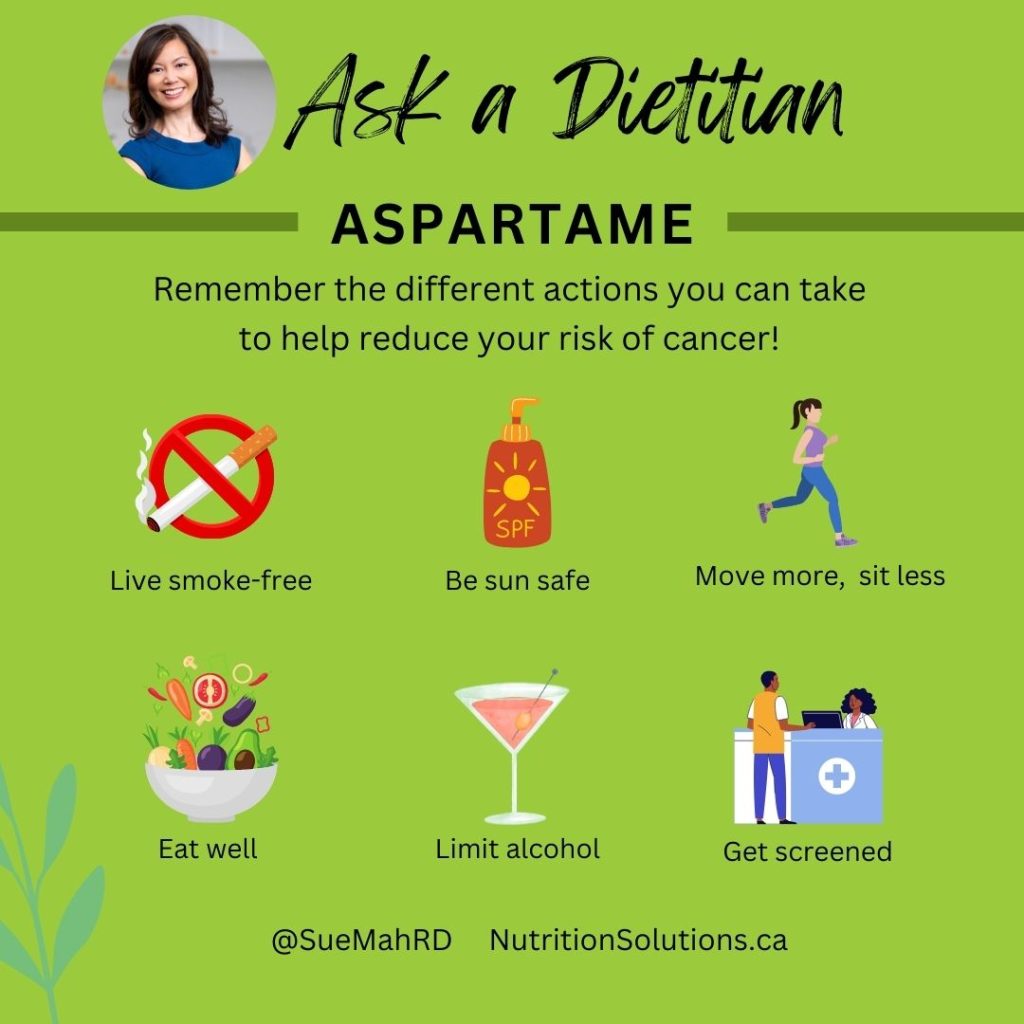
  • Take other healthy actions to lower your cancer risk: live smoke-free; be sun safe; move more and sit less; eat well; limit alcohol; and get screened for different types of cancer as recommended by your health care practitioner. 

Different actions to reduce the risk of cancer 


Follow me on Instagram @SueMahRD for weekly nutrition tips and recipes.

Ask a Dietitian: What is high protein milk?

On a recent trip to the grocery store, I noticed a brand of milk labelled as “high protein.” Compared to regular dairy milk, the high protein dairy milk contains 50% more protein and 50% less sugars. See the chart below for a quick nutritional comparison.
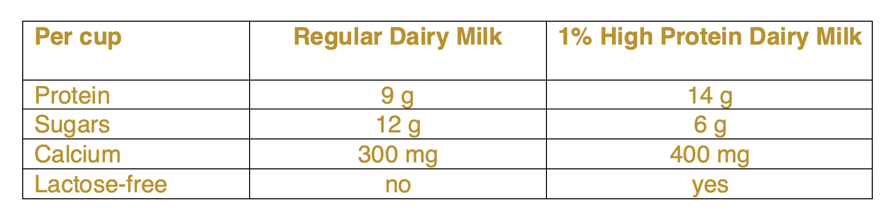
chart comparing nutrition info for regular vs high protein milkAccording to the company website (FairlifeCanada.ca), the high protein milk is made through an ultra-filtration process. No protein powders are added to the milk. Instead, the milk flows through multiple filters which concentrates the protein and calcium content while separating out the sugars (lactose). Most of the lactose is removed during this ultra-filtration. A lactase enzyme is then added to convert any remaining lactose into smaller, digestible sugars, resulting in a lactose-free milk with only 6 grams of sugars.

Drinking a high protein dairy milk can be a good option if:

  • You are trying to consume more protein and / or calcium in your meals
  • You are lactose-intolerant
  • You are trying to meet protein goals for muscle strength, bone health and improved sports performance
  • You are experiencing a health condition and need extra protein to build / repair muscle and bone


Written by Sue Mah, MHSc, RD, PHEc, FDC, Award-winning dietitian

Restricting Food Advertising Primarily Directed at Children

kids looking at their smart phones


Are you concerned about food ads to kids? Here’s your chance to share your thoughts!

Health Canada is now seeking YOUR comments on a policy update on Restricting Food Advertising Primarily Directed at Children. While kids see food ads in a variety of media platforms, food packages, sports sponsorships and settings (such as stores, theaters and rec centres), this first phase of the policy will focus on food advertising seen on television and digital media.

Your comments can help shape the draft regulations.

The full policy update is available here, and below I’ve listed some important background below.

Background

  • As part of Health Canada’s Healthy Eating Strategy, the government is planning to restrict advertising to children of foods that contribute to excess intakes of sodium, sugars and saturated fat.
  • By limiting kids’ exposure to influential food advertising, Health Canada aims to lower a child’s risk now and later for developing overweight / obesity as well as diet-related diseases such as diabetes, cardiovascular disease, different types of cancer, dental disease and osteoporosis.
  • During the COVID-19 pandemic, children’s screen time increased, leading to potentially more exposure to food advertising.
  • Research from 2022 found that Canadian kids aged 2-6 years spend 24 hours each week watching TV / videos / YouTube and using social media / gaming. For kids aged 7-11, this figure rises to 30 hours per week.
  • On average, kids see 5 food ads per day on TV and 4 per day on social media. Teens see about 27 food ads on social media daily.

Health Canada is hosting webinars to discuss the policy update.

Register for the English webinar – Thurs May 11, 2023 @ 1:30-3pm EDT

Register for the French webinar – Thurs May 11, 2023 @9:30-11am EDT

Health Canada is specifically looking for comments related to:

  • Defining advertising that is primarily directed to children
  • Targeting restrictions to advertising on TV and digital media
  • Restricting advertising for foods that contribute excess intakes of sodium, sugars or saturated fat

You may also send comments by June 12, 2023 to:

Bureau of Policy, Intergovernmental and International Affairs, Food Directorate

Health Products and Food Branch, Health Canada
251 Sir Frederick Banting
Postal Locator 2204C
Ottawa, ON K1A 0K9
Email: bpiia-bpaii@hc-sc.gc.ca


References: Health Canada (April 28, 2023). Policy update on restricting food advertising primary directed at children: Overview. https://www.canada.ca/en/health-canada/services/food-nutrition/healthy-eating-strategy/policy-update-restricting-food-advertising-primarily-directed-children.html


Love to learn? Love to eat?

Sign up for my free nutrition news, tips, trends, recipes and fascinating food facts!