
Blog / Recipes

Ask a Dietitian: What is Resistant Starch…and how can it benefit your health?

Text on a backdrop image of cooked pasta, cooked potatoes and cooked riceResistant starch is a type of fibre that resists digestion in the small intestine, and it can have health benefits.

One way to create resistant starch is to cook and then cool / refrigerate certain types of carbohydrates, such as potatoes, pasta and rice. This process (called “retrogradation”) changes the structure of some of the original starch to create a resistant starch that doesn’t get digested. The amount of resistant starch doesn’t change significantly when the food is reheated.

Here are a few health benefits of resistant starch:

  • Blood sugar control: Usually, starchy carbohydrates are digested and broken down into glucose which can raise your blood sugar levels. Since resistant starch is not digested, it doesn’t have this effect, so it can be beneficial for controlling your blood sugar levels.
  • Gut health: Resistant starch travels to the large intestine where it acts as food for the good bacteria in our gut. In other words, resistant starch is a prebiotic! When the resistant starch is fermented in the large intestine, it produces beneficial, short chain fatty acids.
  • More gut health: Since resistant starch is fermented slowly in the large intestine, it may cause less gas and bloating than other fibre-rich foods.
  • Satiety: Eating foods with resistant starch can help you feel full for longer.

Here’s what you can do:

  • Pasta: Cook pasta to al dente. Once cooled, store the pasta in the refrigerator. The longer it is refrigerated, the more resistant starch is formed. Eat the pasta cold in a pasta salad like my Caprese Pasta Salad, add to a soup, or reheat the pasta and enjoy it with a sauce. Bonus tip: Cook pasta to al dente – it will have a lower glycemic index than mushy pasta and create a slower rise in your blood sugar levels.
  • Potatoes: Boil, roast or bake the potatoes. When cool, store the potatoes in the refrigerator for at least a few hours, preferably overnight. Eat the potatoes cold in a potato salad or reheat them in your favourite recipe.
  • Rice: Cook rice as you normally would. Allow the rice to cool at room temperature and then refrigerate for at least 12 hours. Use the rice to make Best Shrimp Fried Rice or simply enjoy the reheated rice as a side dish. The amount of resistant starch does not change much after reheating cooked and cooled rice, pasta or potatoes.
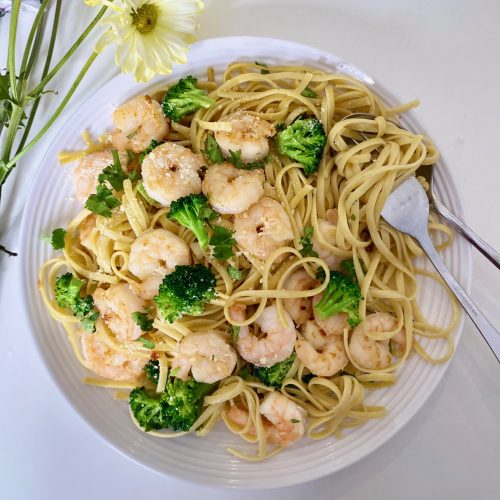
 

Garlic Shrimp Linguine

A plate of shrimp linguine with broccoli florets.

Garlic Shrimp Linguine

Calling all pasta lovers! This fast and easy dish is perfect for dinner on a busy weeknight or lazy weekend!
Course Dinner

Ingredients
  

  • 1 package (454 g) uncooked linguine
  • 2 cups broccoli florets
  • 3-4 cloves garlic, minced
  • 400 g frozen shrimp (thawed, peeled and deveined)
  • 2 T olive oil
  • salt and pepper to taste
  • 1/4 cup fresh lemon juice
  • 1/4 cup grated Parmesan cheese
  • 1/4 cup fresh parsley, chopped

Instructions
 

  • Cook pasta ccording to package directions. Add broccoli florets during the last 2 minutes of cooking. Drain pasta and broccoli, and set aside.
  • In a medium-sized bowl, toss shrimp with minced garlic.
  • Heat oil over medium heat in a frying pan. Add shrimp and garlic. Season with a pinch of salt. Cook for about 2-3 minutes on one side, flip and cook for another 2 mnutes or until shrimp beginsto turn pink.
  • Add cooked pasta and broccol. Season with salt and pepper.
  • Pour in lemon juice. Toss until pasta is well coated.
  • Garnish with chopped parsley. Sprinkle on parmesan cheese just before serving.
Keyword Garlic Shrimp Linguine, Linguine, Pasta, shrimp, Shrimp Linguine

Lemon Garlic Pasta

Lemon pasta crop.JPG

My kids love the taste of fresh lemons, so we created this pasta dish together.
It’s super easy, and best of all, I always have the ingredients on hand. Use this recipe as a guide and feel free to adjust to your own taste – add more garlic if you’re a garlic fan, add more lemon if you like it more lemony.

To make this a meal, top the pasta with your favourite protein and a big handful of vegetables. I like adding pan-seared shrimp with peas or grilled chicken with diced cherry tomatoes!

Ingredients
4 cups cooked, hot, drained linguine or spaghetti pasta
2 T olive oil
2 cloves garlic, minced
zest of 1 lemon
1-2 T fresh lemon juice
salt and pepper to taste

Method
1. In a pan, heat olive oil on medium heat. Sauté the garlic over medium heat for about about 45 seconds or until you can smell its wonderful aroma!
Be careful not to burn the garlic.
2. Add the cooked pasta to the pan and toss to coat. Remove from heat.
3. Sprinkle in the lemon zest and 1 T lemon juice. Toss.
4. Add salt and pepper to taste.
5. Taste test and add another 1 T of lemon juice if needed.
Optional: Add fresh basil leaves.