Fibremaxxing is the latest nutrition trend on social media. Should you try it?
What is fibremaxxing?
Fibremaxxing isn’t a medical term. In fact, my computer’s spellcheck doesn’t even accept the word (haha!).
Fibremaxxing essentially encourages you to maximize your fibre intake in meals and snacks throughout the day, to promote your overall wellness and digestive health. The aim of fibremaxxing is to meet or exceed the Recommended Dietary Intake for fibre, which is between 25 to 38 grams for adults. Most of us are only eating about half the amount of fibre that we need.
Why do we need fibre?
Fibre has many health benefits. First of all, there are generally two main types of fibre:
Soluble fibre – this is the type of fibre that can help lower blood cholesterol levels and control your blood sugar. It’s found in foods like apples, oranges, carrots, oats, barley, beans and lentils.
Insoluble fibre – this is the type of fibre that helps you stay regular and prevent constipation. It’s found in foods like berries, broccoli, carrots, potatoes, bran and whole grains.
Eating fibre also helps reduce your chances of developing heart disease, type 2 diabetes and colon cancer. Plus, fibre promotes gut health.
Should you try fibremaxxing?
Yes, you could try it, but with some very important cautions!
1. Focus on meeting, not exceeding the fibre recommendations. Too much of a good thing is not better for your health. Read the Nutrition Facts information to find the fibre content of packaged foods and check out the list of fibre rich foods below.
2. Add more fibre gradually. If you pump up the fibre too quickly, your gut will tell you – aka hello bloating, constipation or diarrhea. Aim to add a few grams of fibre every couple of days and build up to 25-38 grams daily.
3. Build sustainable habits. Try adding an extra veggie at dinner, having a bean-based meal or snacking on nuts.
4. Get plenty of fluids. Fluids help fibre move through your body.
5. Reach for food first. Food is the most delicious way to get fibre. Only use fibre supplements / powders if needed and check with your healthcare professional first.
Note that extra fibre may not be recommended if you have / had irritable bowel issues, surgery, or are preparing for tests such as a colonoscopy. Always check with your healthcare professional.
Here are some top foods for fibre.
Fruits
Apple with skin – 5 g
Avocado ½ – 7 g
Banana – 2 g
Blackberry ½ cup – 4 g
Blueberry ½ cup – 2 g
Pear with skin – 5.3 g
Persimmon – 6 g
Pomegranate ½ – 5.6
Prunes, dried ¼ cup – 4 g
Raspberries ½ cup – 4 g
Vegetables
Artichoke hearts ½ cup – 7.6 g
Broccoli ½ cup – 2.9 g
Brussels sprouts ½ cup – 3.4 g
Butternut squash ½ cup – 3.5 g
Carrot ½ cup – 2.5 g
Cauliflower ½ cup – 2.6 g
Corn ½ cup – 3.6 g
Green peas ½ cup – 5.6 g
Mushrooms ½ cup raw – 0.5 g
Sweet potato, mashed ½ cup – 4.3 g
Grains
All Bran Buds cereal 1/3 cup – 11 g (not sponsored; this is a cereal I enjoy)
Barley ½ cup cooked – 3.7 g
Brown rice ½ cup cooked – 2.0 g
Multigrain bread 1 slice – 2.8 g
Quinoa ½ cup cooked – 2.7 g
Whole wheat pasta ½ cup cooked – 2.2 g
Nuts & Seeds
Almonds ¼ cup – 4.5 g
Chia seeds 1 Tbsp – 3.5 g
Chickpeas ¾ cup – 8 g
Edamame (soybeans) ½ cup – 5.7 g
Hemp seeds 1 Tbsp – 0.5 g
Kidney beans ¾ cup –12 g
Lentils ¾ cup – 6.2 g
Sesame seeds 1 Tbsp – 1.1 g
Sunflower seeds ¼ cup – 3 g
Nuts ¼ cup – 2.7 g
Source: Canadian Nutrient File
 With summer on the horizon, beverages are trending again, especially coffee beverages. Do you remember the Dalgona Coffee craze back in 2020? Now, Coconut Cloud Coffee is taking over social media.
 Yes! You’ve heard of the saying, “An apple a day keeps the doctor away!” But, if you experience constipation, the advice can be changed to “Two kiwis a day keeps the doctor away!”


 On a recent trip to the grocery store, I noticed a brand of milk labelled as “high protein.” Compared to regular dairy milk, the high protein dairy milk contains 50% more protein and 50% less sugars. See the chart below for a quick nutritional comparison.
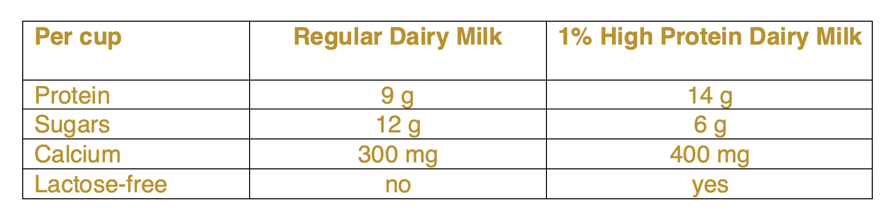 According to the company website (FairlifeCanada.ca), the high protein milk is made through an ultra-filtration process. No protein powders are added to the milk. Instead, the milk flows through multiple filters which concentrates the protein and calcium content while separating out the sugars (lactose). Most of the lactose is removed during this ultra-filtration. A lactase enzyme is then added to convert any remaining lactose into smaller, digestible sugars, resulting in a lactose-free milk with only 6 grams of sugars.