Blog / Recipes

Hearty Morning Oatmeal

A bowl of cooked oatmeal topped with hemp seeds, walnuts, bran cereal, blueberries and raspberries.

A bowl of cooked oatmeal topped with walnuts, hemp seeds, bran cereal, blueberries and raspberries. The bowl is on a yellow towel with a yellow spoon.

Hearty Morning Oatmeal

This hearty breakfast is packed with cholesterol-lowering ingredients like oats, walnuts, hemp seeds, bran cereal and fresh berries.
5 from 1 vote
Course Breakfast
Servings 1

Ingredients
  

  • 1/3 cup quick cooking oats
  • 1 cup skim milk
  • 1 tsp brown sugar (optional)
  • 2 tbsp All Bran Buds cereal
  • 1/4 cup walnuts
  • 1 Tbsp hemp seeds
  • 1 cup fresh or frozen berries
  • 1 scoop collagen powder (optional)

Instructions
 

  • Add oats and milk into a microwave safe bowl. Microwave for 1 1/2 to 2 minutes or follow package directions.
  • Stir in brown sugar and collagen powder (all optional).
  • Add toppings - walnuts, hemp seeds, Brazil nut, bran cereal and berries.

Notes

1. This recipe provides about 21 grams of protein and 11 grams of fibre. With a scoop of collagen, the protein is increased to 31 grams.  Adults need between 21-38 grams of fibre every day. 
2. All Bran Buds cereal (different from All Bran) contains psyllium - a special type of fibre shown to lower blood cholesterol levels. 
Keyword berries, breakfast, cholesterol, heart health, hearty morning oatmeal, nuts, Oatmeal, oats, seeds

What are plant sterols?

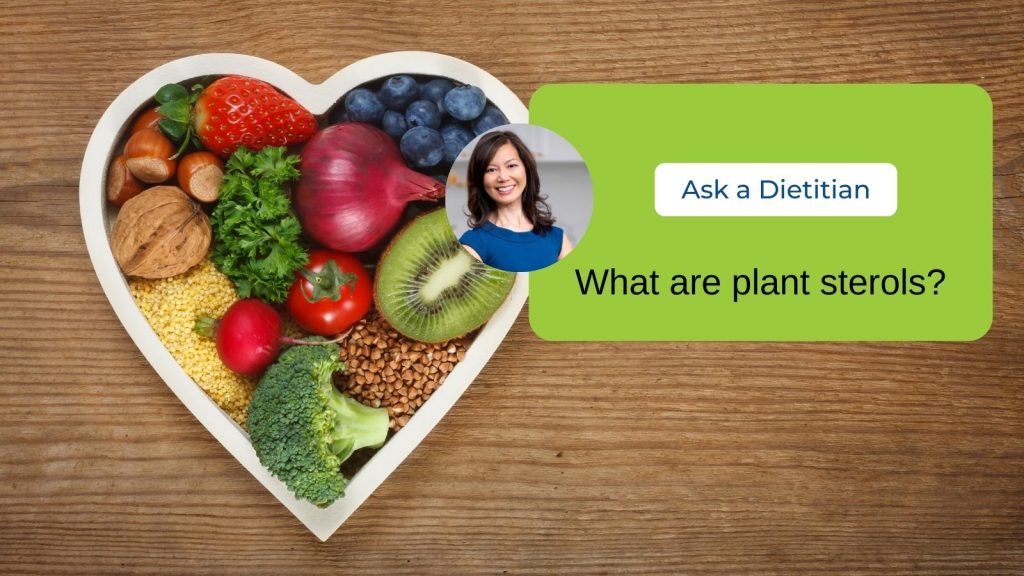
A white heart-shaped bowl filled with heart healthy foods such as nuts, broccoli, kiwi and blueberries. A headshot of Sue is within the image with the caption reading "Ask a Dietitian."


Plant sterols are also called “phytosterols” (phtyo means plant). They’re like cousins to cholesterol because they have a similar structure, and are found naturally (in tiny amounts) in plant-based foods – such as fruits, vegetables, nuts, grains and vegetable oils.

If you have high blood cholesterol, plant sterols may be beneficial because they’ve been shown to decrease the levels of “bad” LDL cholesterol (Low Density Lipoprotein cholesterol) – this is the type of cholesterol that is a risk factor for heart disease.

In the body, plant sterols partially block the absorption of cholesterol. The cholesterol gets removed as waste (i.e. in our feces) which then results in an overall lower level of LDL cholesterol in your blood.

So, how much plant sterol is needed for this benefit? Research shows that eating 2 grams (2,000 milligrams) of plant sterols every day can lower LDL cholesterol levels by 8-10%. This amount is nearly impossible to get with regular foods since a typical healthy diet only contains about 200-400 milligrams of plant sterols.

To get 2,000 milligrams of plant sterols a day, you’ll need to consume foods and beverages that are fortified with plant sterols. In Canada, foods fortified with plant sterols include mayonnaise, margarine, salad dressing, yogurt, yogurt drinks, vegetable juice and fruit juice. A serving of these foods may contain up to 1 gram (1,000 milligrams) of plant sterols, so read package labels to check the exact amount. Plant sterol supplements are another option.

Plant sterols from food and / or supplements are not a substitute for a heart healthy diet or cholesterol-lowering medications. Always check with your doctor first before consuming foods or supplements with plant sterols because your medications may need to be adjusted.

Health Canada approves new health claim for barley and cholesterol

There’s good new for barley! Health Canada has just approved the following heart health claim: “Barley fibre helps reduce cholesterol, which is a risk factor for heart disease.” To qualify for this claim, the food must contain at least 1 gram of beta-glucan from barley grain products per reference amount and per serving of stated size. Research shows that 3 grams of barley beta-glucan per day is effective in lowering blood cholesterol levels. About 44% of Canadians have high blood cholesterol which is a risk factor for heart disease.

Image source: Wikia.com

New heart health claim

About 44% of Canadians have high blood cholesterol which is a risk factor for heart disease. Health Canada has recently approved the following new heart health claim: “Replacing saturated fats with polyunsaturated and monounsaturated fats from vegetable oils helps lower/reduce cholesterol.” The claim may be applied to vegetable oils or a food made with vegetable oil provided that the food meets the specific criteria. For example, one of the criteria is that the vegetable oil must contain more than 80% polyunsaturated and monounsaturated fat.

Healthier oils are pictured in the chart above by larger blue, orange and yellow coloured bands which show the relative percentages of polyunsaturated fats and monounsaturated fats, and smaller red bands which show saturated fats.

What’s the consumer advice? Switch from saturated fats such as butter and lard to healthier oils such as canola, safflower and sunflower.

Keep your Eyes on Psyllium

Health Canada has recently permitted a new health claim linking the consumption of psyllium fibre to a reduction of blood cholesterol. A sample claim is: “Psyllium fibre helps lower cholesterol, a risk factor for heart disease. 1 cup (30 g) of Brand X cereal with psyllium supplies 50% of the daily amount of fibre shown to help lower cholesterol.” The “daily amount” is 7 g of psyllium fibre. To make this claim, the food must contain at least 1.75 g of psyllium soluble fibre per serving size as well as meet other specific nutrient criteria.

According to Health Canada, increased psyllium intake could be beneficial for adults who have normal or high blood cholesterol levels. Psyllium is a grain similar to wheat and oats, and is a concentrated source of soluble fibre.

Only a few breakfast cereals currently contain psyllium fibre, but you can bet we’ll be seeing more psyllium-containing products hit the grocery shelves soon. For more information, read http://www.hc-sc.gc.ca/fn-an/label-etiquet/claims-reclam/assess-evalu/psyllium-cholesterol-eng.php