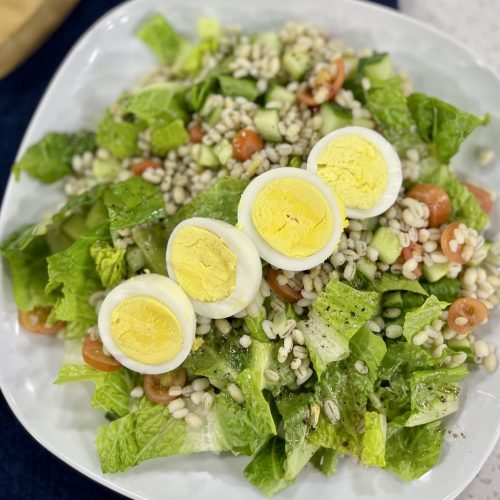
For February Heart Month, I showed 3 heart healthy breakfast ideas on TV. Check out the recipes below and watch the full interview clip.
BLT Breakfast Salad (Barley, Lettuce, Tomato)

For February Heart Month, I showed 3 heart healthy breakfast ideas on TV. Check out the recipes below and watch the full interview clip.
BLT Breakfast Salad (Barley, Lettuce, Tomato)


Canada’s Food Guide gives us general information about healthy eating. Now, a new report – Applying Canada’s Dietary Guidelines – by Health Canada shares additional recommendations to help you meet your nutritional needs. Here are 7 things you can do to eat better and why!
Did you know that vegetables and fruit make up less than 25% of the foods we eat? We need to eat a dark green vegetable every day for essential vitamins and minerals, especially folate and iron.
Folate and iron are both important for red blood cells which carry oxygen from our lungs throughout our body.
Special attention: For adolescents and adults who could become pregnant and those who are pregnant / breastfeeding, eat foods rich in folate as well as take a daily multivitamin supplement with 400 mcg folic acid (400 micrograms or 0.4 milligrams). During pregnancy, the multivitamin should also contain iron.
Examples of dark green veggies:
Recipe ideas: Kale Chickpea Salad with Trout, Blistered Green Beans with Ginger
Orange veggies are super sources of beta-carotene which convert to vitamin A in our body. Vitamin A plays a role in keeping our eyes, skin and immune system healthy.
Special attention: Men and individuals who are breastfeeding should enjoy orange veggies more often – on most days of the week.
Examples of orange veggies:
Recipe ideas: Mexican Stuffed Peppers with Quinoa, Beans and Corn, Sheet Pan Pork Tenderloin with Sweet Potatoes and Asparagus
On average, less than 30% of the total grains we eat are whole grain or whole wheat. Not only are whole grains naturally low in saturated fat, sodium and sugars but they also provide folate, thiamin, vitamin B6, iron, zinc, magnesium and fibre.
Enriched, refined grain foods (such as white rice and white bread) also provide iron and folic acid. However, breads can be a top source of sodium, and refined breakfast cereals / granola bars can be a source of added sugars.
Examples of whole grains:
Recipe ideas: Baked Mushroom and Herb Barley Risotto, Bulgur Chicken Burgers with Yogurt Sauce
Canada’s food guide recommends eating plant-based foods more often to reduce our overall intake of saturated fat. Currently, less than 20% of the protein foods we eat are plant-based. To pump up the plant protein, eat legumes (dried peas, beans, lentils, peanuts) or tofu at least once a day, as well as nuts or seeds at least once a day.
Recipe ideas: Chickpea Burger, Crispy Tofu Noodle Bowl
Replace foods high in saturated fat with foods which contain mostly unsaturated fat such as:
Special attention: Help young children enjoy a variety of these foods throughout the day to help them meet their nutritional requirements for fat and calories.
Recipe ideas: Light Lemony Spring Herb Hummus, Crunchy Flax Chicken Nuggets
Calcium is a nutrient needed at all stages of life for bone health. Look for choices which meet your traditions and personal / cultural preferences.
Special attention: Children, adolescents, adult female and older adults have higher needs for calcium than others, so should include calcium containing foods at all meals and some snacks.
Examples of food sources of calcium:
Recipe ideas: Mac ‘n Cheese Muffins, Cod au Gratin
Vitamin D is made by the skin when exposed to sunlight. However many factors like smog, season, time of day, sunscreen use, and amount of skin exposed can all affect the amount of vitamin D that is produced.
If you don’t eats foods with vitamin D every day, take a 400 IU (10 mcg) vitamin D supplement. Some multivitamins also contain vitamin D.
Special attention: As we age, we make less vitamin D from the sun, and this can affect our bone health. Anyone aged 51 and older should take a 400 IU (10 mcg) vitamin D supplement every day in addition to eating vitamin D rich foods.
Examples of foods with vitamin D:
Recipe ideas: Baked Salmon with Honey Mustard Marinade, Smoked Salmon Deviled Eggs
References: Health Canada (2022 May 7). Applying Canada’s Dietary Guidelines.

The holidays are just around the corner! How are you feeling? Excited? Overwhelmed? Nervous about all of the food?
As a dietitian who loves to eat, I’m sharing 3 tips to help you eat well through the holidays (and beyond)!
There’s probably going to be a lot of different food choices. Tell yourself that you don’t have to eat them all. Do a once over of all the choices available and then be picky about what you put on your plate. Love your uncle’s mashed potatoes? Go for it! Not crazy about your cousin’s quiche? Give it a pass.
You know the saying – “Our eyes are bigger than our stomachs!” Sometimes, we take more food than we can realistically eat. In my experience, I find that the first three or four bites of a food are AWESOME! And then after that, well, the food becomes a little meh. If a food still tastes awesome after the fourth bite, you can always go back for more. Practice this type of mindfulness to help prevent overeating. Bonus – you’ll reduce food waste too!
Ditch the diet talk like “I know I shouldn’t, but I’m going to have dessert” or “I’m going to be bad and have another chocolate.” Avoid judging yourself or anyone else for what and how much they’re eating. Instead, build a healthy relationship with food that allows you to honour your hunger / cravings and enjoy food for it’s nourishment, comfort and nostalgia. Our kids, grandkids, nephews and nieces are watching and listening to us. Let’s model healthy behaviours and show them that all foods can be enjoyed without guilt.
Wishing you and your loved ones a happy holiday season!
P.S. Here’s the recipe for these cute Strawberry Santas!
This article originally appeared on Canadian Food Focus, and I received monetary compensation from them to research and write this information. My articles represent my personal and professional views. I am one of many dietitian writers for Canadian Food Focus, which is a source for Canadian food and farming stories that provide advice to help you make confident food choices.
If you’re a vegetarian, you’re probably eating a variety of plant-based foods such as fruits, vegetables, whole grains, legumes, nuts and seeds. Following a plant-based eating style has many benefits, such as a lower risk for developing heat disease, type 2 diabetes and colon cancer. But did you know that you could be missing out on some important nutrients? Here are 3 key nutrients to think about.
Iron is a part of hemoglobin that’s in red blood cells and helps carry oxygen throughout our body. There are two different forms of iron:
Heme iron has better bioavailability, in other words, it is more easily absorbed by our body compared to non-heme iron. For this reason, it’s recommended that vegetarians get almost two times more iron as non-vegetarians, especially adults and adolescent females.
To improve the absorption of non-heme iron, try these tips:
Best vegetarian foods for iron:
Zinc is important for a strong immune system and helps with wound healing. Vegetarians, especially vegans, can be at a higher risk for zinc deficiency because fruits and vegetables contain very little zinc. If you’re a pescatarian, try fish and seafood for zinc. If you’re a lacto-ovo vegetarian, you can get zinc from eggs and dairy products.
Plant-based foods contain phytates (a natural substance found in grains, nuts, seeds and legumes) which actually reduces zinc absorption. To improve the absorption of zinc, try soaking grains, nuts, seeds and legumes before cooking.
Best vegetarian foods for zinc:
Vitamin B12 is important for healthy nerve cells and for making red blood cells. Vitamin B12 is found naturally only in animal-based foods. Many plant-based foods are fortified with vitamin B12 such as fortified plant-based beverages and products labelled as “simulated meat products” or “simulated poultry products.” If you’re vegan, it may be helpful to take a vitamin B12 supplement. Talk to a Registered Dietitian for more advice.
Best vegetarian foods for vitamin B12
There are many delicious foods to enjoy on a vegetarian diet. If you’re not sure whether you’re getting enough nutrients or have questions about supplements, consult with a Registered Dietitian.
References: Health Canada (2022 May 7). Applying Canada’s Dietary Guidelines – Considerations for Vegetarian Diets.

Chef Wolfman (first on left) with Sue, Lucia, USA Consulate General Susan Crystal (third from right) and others, preparing foods using Indigenous ingredients.
Disclosure: This post reflects my learnings after attending a sponsored event, hosted by Taste USA and the Ontario Produce Marketing Association. All opinions are my own.
Have you heard of a Spirit Plate? I hadn’t until I met Chef David Wolfman.
Chef Wolfman is an internationally recognized expert in traditional Indigenous cuisine, member of the Xaxli’p First Nation in BC and a Culinary Arts Professor at George Brown College in Toronto. At a culinary master class sponsored and hosted by Taste USA and the Ontario Produce Marketing Association, I had the wonderful opportunity to cook and learn from the Chef. Along with dozens of other participants, we prepared dishes using traditional ingredients such as Wild Rice Jambalaya and Shawnee Cake, and Barbecued Pork Tenderloin with Strawberry Sauce served with Salad and Chokecherry Drizzle.
Before we sat down to eat together, Chef Wolfman assembled a Spirit Plate with samples from each of the cooked dishes. The plate is then left outside to honour both the ancestors and children who are no longer here with us. 🧡
This simple yet meaningful gesture allows us to remember those who have come before us and those who have left us. It’s a reminder that food is love and connection.
In this video, Chef Wolfman describes the Spirit Plate.
Thank you Chef for sharing your wisdom and knowledge with us!

It’s the question you may have always wondered, but were too shy to ask!
June is Men’s Health Month, so let’s take a look at some of the research on this topic.
A study published in the Journal of the American Association Network Open journal suggests that a healthy dietary pattern may play a role in maintaining erectile function in men. Researchers from the University of California and Harvard University looked at the food and nutrient data from over 21,000 healthy men aged 40 to 75 who had no previous diagnosis of erectile dysfunction or diabetes or heart disease. The men were part of the Health Professionals Follow-up Study. The researchers found that men at all ages who followed a Mediterranean-style diet had the lowest risk of erectile dysfunction. A Mediterranean-style diet focuses on fruits, vegetables, nuts, legumes and fish.
Fruits and vegetables contain special plant nutrients called flavonoids. Researchers in Greece found that eating fruits and vegetables lowered the risk for erectile dysfunction by 32% in men aged 18 to 40 years.
Another study from researchers in Spain looked at 83 healthy men aged 18-35. For 14 weeks, these men were asked to follow their usual diet and were divided into 2 groups – one group also ate 60 grams (about ½ cup) of nuts a day such as walnuts, almonds and hazelnuts; the other group of men did not eat nuts. The study found that a healthy diet supplemented with mixed nuts may help to improve erectile and sexual desire.
Bottom line: Fruits, vegetables and nuts are the foundation of an overall healthy diet that can benefit not only your heart health but also your sexual health.


Disclosure: This is a sponsored post with CropLife Canada. The information shared in the blog are my opinions based on my review of this topic. I consult only with companies which align with my personal and professional values.
Have you heard about the Dirty Dozen? Let’s take a closer look at this and what it means for you and your family.
The Dirty Dozen is an annual list created by the Environmental Working Group (EWG), a United States-based environmental advocacy organization. The list ranks the top 12 conventionally grown fruits and vegetables in the United States that they claim should be avoided due to pesticide residues.
But what the Dirty Dozen list doesn’t tell us is how much residual pesticide is actually on the produce. We need this information to figure out if the amount we’re eating is at a level that could harm our health.
Pesticides are substances that can be from either synthetic or natural sources, and are used on foods to protect them from diseases and pests such as insects and weeds. With the help of pesticides, farmers are able to grow safe, affordable and abundant food for Canadians.
As a dietitian, I worry that the Dirty Dozen list may cause food fear. The fact is both organic and conventional farmers use pesticides to control pests. Just because a pesticide residue is present, doesn’t mean that it poses a risk to our health. In fact, detection technology is now so sophisticated that it can detect parts per billion (think a drop of water in an Olympic size swimming pool). And, Canada has one of the most stringent regulatory systems in the world for pesticides. Before a pesticide can even be used on a food product, Health Canada assesses the health impact of any pesticide residues that may be in or on the food. It even takes into account the sensitivities of specific subsets of the population like infants, children and pregnant women.
The Canadian Food Inspection Agency inspects domestic and imported foods for pesticide residues. Over 99% of the food that is tested is below the MRLs. And in rare cases where the residue level is above the MRL, it does not pose a health risk as the MRL is set significantly below any level of concern.
We all want and deserve safe, nutritious and affordable food for ourselves and our families. Here are some things to consider if you’re concerned about pesticides.