Blog / Recipes

That Study about Milk and Risk of Breast Cancer – 6 Questions to Ask Before Jumping to Conclusions

Glass of milk

Image: Pixabay

You may have seen the recent media headlines about a study looking at drinking milk and its impact on breast cancer risk. It’s easy to get caught up in the news. But with any nutrition research, it’s important to read it with a critical eye and ask yourself a few important questions before jumping to conclusions.

Question #1 – Did the study involve humans, animals or cells in the lab? Who were the participants and how many? How long was the study?

Human studies are always the most applicable. This study looked at almost 53,000 adult women across North America. The average age of the women was 57 years and they were all initially free of cancer. The study lasted almost 8 years.

Question #2 – What is the source of the study? Was it published in a reputable, peer-reviewed journal? Was it preliminary research that has yet to be published? 

This study was part of the large Adventist Health Study-2 and published in the International Journal of Epidemiology, which is a peer-reviewed journal. Researchers were from the School of Public Health at Loma Linda University in California.

Question #3 – How was the study designed?

The study design has a big impact on the type of conclusions that can be drawn. This study about milk and breast cancer was an “observational” study meaning that researchers observed participants’ diets, collected data and then came up with a summary of their observations 8 years later.

The problem with observational studies is that we can’t make strong conclusions about cause and effect – in other words, we can’t say with certainty that “A causes B.” We can really only say that “A may be linked to B.” This is a big limitation of observational studies. A better study design would be “experimental”. In an “experimental” study, researchers randomly ask the participants to either undergo treatment A (such as drinking milk) or not undergo treatment A (such as not drinking milk), compare the results, and then see if treatment A causes outcome B (such as an increased risk of breast cancer). Of course, ethics are highly considered ahead of time, and the study needs to include a good number of participants for a decent duration. The advantage with experimental studies is that conclusions can be made about cause and effect.

Also, this study left out some important factors that could have affected the results. For example, the women were only asked if they ever smoked and how long they’ve used alcohol. The researchers didn’t ask for the amounts of tobacco smoked or the amounts of alcohol consumed. In addition, only “vigorous physical activity” was considered, not moderate physical activity (which might be more realistic) or even total minutes of physical activity. Social determinants of health weren’t considered either – like income, education or employment – and we know that these can all affect one’s health and risk for chronic diseases.

Question #4 – How was the nutrition information collected?

This study used self-reported food frequency questionnaires and 24-hour food recalls. In other words, participants told researchers how often they ate certain foods as well as what foods / beverages they consumed in the last 24 hours. There are a few problems with this type of data. First of all, this information was only collected ONCE, and at the beginning of the 8 year-long study. One has to ask if the participants ate exactly the same way years later? (Think about your own diet – has it changed over the last 8 years?) Secondly, self-reported data isn’t entirely accurate since it’s easy to under-estimate or over-estimate the amounts of food eaten. (Can you remember what and how much you ate yesterday or the day before?) And finally, a 24-hour food recall may have been taken on an “off” day, such as a weekend – which may not be an accurate picture of your true dietary intake.

Question #5 – How were the results interpreted?

This question is a bit tricky but crucial to the overall interpretation of the research. The researchers found that as milk intake increased, so did the risk of breast cancer. One news story stated that “women who drink as little as one cup of dairy milk per day could increase their risk of developing breast cancer by up to 50 per cent.” While this sounds alarming, we need to look at the statistics a bit closer.

At the end of the study, 1,057 women out of the 53,000 women developed breast cancer – this is a risk of 2% or 2 cases per 100 women. When women drank 1 cup of milk, their chances of developing breast cancer increased to 3% or 3 cases per 100 women. The difference is 1% and this is called the “absolute risk”. Since the risk of breast cancer went up from 2% to 3%, the overall increase is indeed 50% and this is called the “relative risk”. So while 50% sounds like a big number, the more important and more relevant number for YOU is the absolute risk which is only 1%.

Question #6 – What are other credible authorities saying about this topic?

Dietary guidelines are shaped by evidence-based studies, not just a single study. Always check to see what other credible, professional authorities are saying about the topic. When it comes to preventing cancer, both the Canadian Cancer Society  as well as the American Institute of Cancer Research recommend eating whole grains, vegetables, fruit, beans and lentils as a major part of your everyday diet. Sounds like great advice to me!

Healthy Eating is More than Food!

Sue Mah sitting on sofa with TV hosts Annette Hamm and Bob

Happy Nutrition Month 2020! This year’s theme is “More than Food!”

When we think of healthy eating, we often think about WHAT to eat and maybe even WHAT NOT to eat. But healthy eating is more than food. It’s about HOW to eat too. Mindful eating encourages us to be aware of our hunger and fullness cues, to be present with food, and to be non-judgmental with our food choices.

Watch my fun interview and Mindful Eating Quiz on CHCH Morning Live.

For more nutrition tips check out the Dietitians of Canada website.

Pink top from my friends at Tashi – check them out:  IG @Tashi_Apparel    TWITTER @Tashi_Toronto

Canadians’ Eating Habits

people eating together

Since 1989, the Tracking Nutrition Trends (TNT) survey has been looking at the self-reported knowledge, attitudes and behaviours of adult Canadians with respect to food and nutrition. It’s believed to be the longest standing nutrition tracking study in Canada! The survey sampled 1,500 Canadians online in August 2018 and the results were recently released. Here are a few highlights:


8 out of 10 people8 out of 10 Canadians rate their eating habits as good to excellent (43% good, 28% very good, 8% excellent). This represents very little change from the last TNT survey in 2015.


6 out of 10 people


6 out of 10 Canadians use food and diet to manage health conditions. The top five health conditions of concern include: obesity/overweight, high blood pressure, pre-diabetes/diabetes, high blood cholesterol, and food allergies.


58% of Canadians say they have made changes to their eating habits in the past year. The key changes are eating MORE fruits and vegetables, fibre and protein, as well as eating LESS sugar, salt / sodium and fatty foods.


prepping food


2 out of 3 Canadians prepared their last 10 meals from scratch most of the time. Millennials are most likely to purchase foods that are ready to eat or ready to re-heat.


woman eating lunch alone at her desk

Almost 25% of Canadians say they eat alone most of the time. This trend was seen across all age groups.


Are you interested in learning more survey results and how they can impact your business? Join me at my our 13th annual Nutrition for NON-Nutritionists course on April 28 at the University of Toronto. Course details and registration are available now.


(Images: Bigstock, Tracking Nutrition Trends, Kasasa.com, NewsTalk1010)


Healthy and Sustainable Eating: Leading the Shift – Event Highlights

Sue Mah with Dr. Fiona Yeudall and Dr. Cecilia Rocha

Sue Mah with Nutrition Connection Forum speakers Dr. Fiona Yeudall and Dr. Cecilia Rocha. Image source: Lucia Weiler

Hosted by Nutrition Connections, this year’s annual forum explored the shifts that will be required in eating habits and food choices in order to benefit the health of current and future generations as well as the health of the planet. Here’s our summary of a few of the presentations.

What is Sustainable Eating? – Dr. Cecilia Rocha

Dr. Rocha is a member of the International Panel of Experts on Sustainable Food Systems, a Professor in the School of Nutrition and a researcher at the Centre for Studies in Food Security at Ryerson University.

Sustainable diets, defined by the Food and Agriculture Organization (FAO) of the United Nations are: those diets with low environmental impacts which contribute to food and nutrition security and to healthy life for present and future generations. Sustainable diets are protective and respectful of biodiversity and ecosystems, culturally acceptable, accessible, economically fair and affordable; nutritionally adequate, safe and healthy; while optimizing natural and human resources.

Rocha reminded us of the 17 sustainable goals proposed by the United Nations, in particular, goal #12 which focuses on responsible consumption and production. Consumers have the potential to be agents of change through their healthy and ethical choices of what to eat. Through responsible consumption, ordinary people can effect change by carefully selecting the products they buy. However, price, convenience and brand familiarity are often the most important decision for most consumers, rather than fairness, sustainability and health.

In a world in which food is mostly a commodity, bought and sold through markets, how do we make the transition from unsustainable and unhealthy food systems to sustainable diets? Can consumers, through their choices of what food to buy, lead the way to that transformation? Rocha further posed this thought-provoking question: Is it realistic or reasonable to put this heroic task on the shoulders of consumers?

Rocha acknowledged that alternative food markets such as Community-Supported Agriculture (CDA), famers’ markets and fair-trade may offer consumers a more sustainable, healthy and ethical model of food production and consumption. Her opinion is that these alternative markets are still viewed as niche and alone, aren’t the answer. Rocha suggested that public policy is needed in at least three areas to facilitate responsible consumption:
– taxes and regulation (e.g. on sugar-sweetened beverages, use of chemicals, ultra-processed foods, and advertising)
– subsidies (e.g. for ecologically-friendly processes and alternative markets)
– information, education and nudging (e.g. food-based dietary guidelines).


How Do Our Eating Habits Compare to Canada’s Food Guide? – Dr. Rachel Prowse

Dr. Prowse, Applied Public Health Science Specialist at Public Health Ontario, compared the recommended proportions of food (by weight) in the new Canada’s Food Guide versus Ontario adults’ intakes from the 2015 Canadian Community Health Survey – Nutrition Public Use Microdata File. Research results are expected to be published next year, however preliminary findings show that we’re not eating according to the recommended proportions of the food guide. Dr. Prowse suggests that non whole grains and “Other foods” (such as cookies, cakes, pastries, ice cream and confectionary) may be displacing nutritious foods on our plates. A consumer shift towards eating a more plant-based diet may help to drive the production of sustainable food options.


A Deep Dive into Food Waste – Dr. Kate Parizeau

As an Associate Professor at the University of Guelph, Dr. Parizeau researches the social context of waste and its management. Parizeau shared some staggering statistics:
– Canada generates 12.6 million tonnes of organic waste per year
– Canada wastes $49.5 billion of food annually – enough to feed every person living in Canada for almost 5 months.

In collaboration with the Guelph Family Health Study, Parizeau looked at food waste both at the household level. Household food waste was defined as either “avoidable” (food that could have been eaten such as whole fruits and vegetables, spoiled food, uneaten leftovers, food past it’s best before date as well as bought but forgotten food) versus “unavoidable” (such as egg shells, banana peels and meat bones).

The study found that about ¾ of the household food waste was avoidable. Most of the avoidable food waste (over 65%) came from fruits and vegetables, 24% from bread and cereals, 6% from meat and fish, and 2% from milk, cheese and eggs. Overall, this amounts to an average of $936 per year, over 175,000 calories thrown out and 1,196 kg of C02 emissions created.
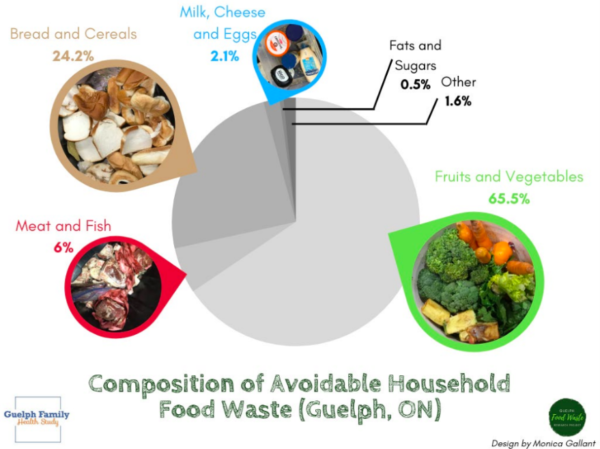
 

Image source: Kate Parizeau


Food literacy skills can result in reduced food waste. Behaviours such as meal planning, shopping with a list, food preparation, storing food safely and cooking at home are encouraged. A new cookbook Rock What You’ve Got – Recipes for Preventing Food Waste is now available for free download. This cookbook was created by the Guelph Food Waste Research Group in partnership with The Helderleigh Foundation, George Brown College’s Food Innovation and Research Studio (FIRSt).



5 Things You Need to Know about that Red Meat Study

A piece of marbled red meat on a plate.
[Image: Canva]

Yes, red meat is in the news…again. Headlines last week announced that we may not have to cut back on red meat or processed meat after all, based on conclusions published in the Annals of Internal Medicine.

This stirred up quite a bit of controversy especially since many health organizations offer different advice. The Canadian Cancer Society for example, recommends limiting red meat (beef, veal, pork, lamb and goat) to 3 servings a week (a serving is 85 grams or 3 ounces of cooked meat – smaller than the size of a deck of cards) and avoiding processed meats.   The World Cancer Research Fund (WRF) advises that if you eat red meat, limit it to no more than about three portions per week (total of 350-500 grams or 12-18 ounces per week). And the WCRF also recommends eating very little, if any, processed meat like bacon, ham, hot dogs and sausages.

So, is that confusing or what? It sure is! And it took me a while to read through the science to figure it out.

Here are 5 things you need to know about the study to help you understand how and why the guidelines were made:

  1. This wasn’t a new study about red meat. Basically, a panel of scientists reviewed existing studies looking at the impact of red meat on health. They looked at “absolute risk”. In other words, they considered how many people per 1000 people would likely benefit from eating 3 fewer servings of red meat or processed meat (e.g. going from 7 servings/week of red meat to 4 servings/week or going from 4 servings/week to 1 serving/week). They found that out of 1,000 people, only between 1 to 18 people would have a lower chance of heart disease, type 2 diabetes or cancer if they ate 3 fewer servings of red meat or processed meat.
  2. The evidence for this guideline is “low” to “very low”. The panel found “low” to “very low” certainty evidence for their conclusions. The panel even admitted that their guideline for adults to “continue current unprocessed and processed red meat consumption” is a weak recommendation. In fact, three out of the 14 panel members didn’t agree with this recommendation.
  3.  Observational studies were reviewed. In observational studies, researchers observe the effect of something – in this case, the effect of eating red meat and processed meat. When it comes to making recommendations though, observational studies aren’t as strong or conclusive as experimental studies in terms of showing a cause and effect relationship. In experimental studies, typically two or more groups are compared – for example, an experimental study could compare the health status of Group A who ate red meat versus Group B who didn’t eat red meat. Plus, many of the observational studies lumped red meat and processed meat together, and didn’t consider other dietary factors or the cooking methods (e.g. broiling versus BBQ).
  4. Pros versus cons. The researchers believed that for most people, the desirable effects from eating less red / processed meat (a potential lower risk for cancer and heart disease) did not outweigh the undesirable effects (impact on life, burden of modifying cultural and personal meal preparation and eating habits).
  5. Other issues were not considered. The researchers acknowledge that their guideline didn’t consider issues of animal welfare and potential environmental impact. They admitted that their guideline may be less relevant for people who see these as important issues.

So what’s the bottom line?

Remember that we choose foods for many different reasons – cost, taste, nutrition, health, animal welfare and environmental concerns. No single food completely causes or prevents a health condition. But we do know that an overall healthy pattern of eating plus lifestyle habits can make a big difference to your well-being. News headlines can be sensational and the stories may not always give you the full picture.

As a dietitian and chef’s daughter, I wholeheartedly believe in enjoying delicious, wholesome food. Processed meat can add extra saturated fat and sodium to the diet – these are the nutrients we’re trying to limit. From a nutrient point of view, red meat is packed with protein, iron, zinc and vitamin B12. Whether you choose to eat red meat or not, keep your portions in check. Moderation is truly the key. And make sure to fill at least half your plate with Mother Nature’s superheroes – fruits and veggies.

Spot the Sugars

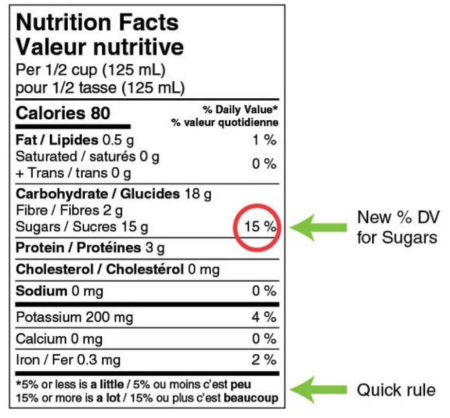
New food labels are coming and for the first time, you’ll see a Daily Value (DV) for “Sugars”. Health Canada has set a DV of 100 grams for total sugars. This includes sugars naturally found in foods such as fruits, veggies and unsweetened milk products, plus the sugars added to foods and the sugars found in foods like honey and maple syrup. Packaged foods with a Nutrition Facts table will now show the “Sugars” content as a percent of the 100 grams Daily Value (%DV).

Nutrition Facts table showing % Daily Value for sugars

But do most Canadians know where the sugars are in their foods?

Watch Sue’s fun TV Interview with Ben Mulroney (Co-host of Your Morning) to spot the sugars in different foods or find the interview here.

The Sweet Spot Workshop – with Chef Claire Tansey

Sue cooking with Chef Claire Tansey
Sue with Chef Claire Tansey

Disclosure: This post was sponsored by the Registered Dietitians at the Canadian Sugar Institute, and I have received monetary compensation. As always, my own professional opinions and views are expressed.

I love food! And a big part of my job as a dietitian is to help Canadians love food too! I’m passionate about translating the complex science of nutrition into everyday healthy eating tips that make sense and are easy for people to follow. So when my dietitian colleagues at the Canadian Sugar Institute invited me to a hands-on cooking Sweet Spot Workshop with Chef Claire Tansey, I was excited to learn more!

First, some nutrition background

Recently, Health Canada announced new guidelines for sugars and also some new changes to how sugars will be shown on food labels.

Specifically, for the first time ever, there is a Daily Value for sugars, set at 100 grams. According to Health Canada, 100 grams isn’t meant to be the recommended amount of sugars to consume, but instead it’s an amount of sugars that is consistent with a healthy eating pattern. On food labels, the sugars content of the food will be listed in grams (g) and also as a percent of the Daily Value (% DV) (see below for the “NEW” image of the Nutrition Facts table).

 Now remember that 100 grams is the total from all types of sugars:

  • naturally occurring sugars (like the sugars found in fruit, veggies and unsweetened milk products);
  • added sugars (like different sugars that are added when cooking or processing food); and
  • free sugars (these are added sugars plus sugars that are naturally found in honey, syrups, fruit juices and fruit juice concentrates).
A comparison of the original Nutrition Facts table to the new one. The new one shows a % Daily Value for sugars.
Image source: Health Canada

Now, the food!

So what exactly does 100 grams of sugars look like when it comes to real food? That’s where the Sweet Spot Workshop comes in. Dietitians teamed up at the workshop to make a day’s menu of food – adding up to 100 grams of sugars, staying within the sodium and fat recommendations, and totalling no more than 2,000 calories (the average number of calories needed by an adult). So here’s what we made. All recipes were inspired by Claire’s latest cookbook Uncomplicated.

Breakfast

Instant Bircher Museli – made with oats, unsweetened apple juice, nuts and fresh pears and paired with a single serving of Greek yogurt – 28 g sugars

Lunch

Chilled Cucumber and Sesame Noodles with Tofu – made with soba noodles, maple syrup, sesame oil, cucumbers, tofu and edamame, served with sweet and sour bok choy – 7 g sugars

Snack

Assorted berries and cherries with a fruit / kale Greek yogurt smoothie – 29 g sugars

Dinner

Coconut Chicken Curry – made with chicken, coconut milk, ginger, curry paste, tomatoes and peas, served with steamed broccoli – 7 g sugars

Dessert

Plum-Almond Galette – made with fresh, local plums – 30 g sugars

The bottom line

You can definitely enjoy a variety of healthy meals with a small dessert AND stay within 100 grams of sugars for the day! Enjoy!


Photos by Flora Wang. 

Kids are back to school…and eating better

Young child washing veggies in the sink.
Father with little son washes vegetables on the kitchen before eating

Image source: Bigstock

With back to school, it’s time to get those lunch bags busy again. A recent study published in the Public Health Nutrition journal found that school kids are eating better than they did 15 years ago. But there’s still room for improvement.

The study, led by researchers at University of British Columbia, compared the diets of about 7,000 kids aged 6 to 17 between 2004 and 2015. The nutritional value of the foods were judged using the Canadian Healthy Eating Index, which considers 11 dietary components such as total vegetables and fruit, whole fruit, whole grain products, saturated fat and sodium.

Overall, there was a 13% improvement in the foods that kids were eating during the school day. Specifically, school kids were eating more vegetables and fruit, as well as eating fewer calories from “minimally nutritious foods” including sugary drinks and salty prepackaged choices.

That’s the good news, but we can do better. Kids still aren’t eating enough dark green and orange vegetables (important for folate and vitamin A) – think spinach, kale, broccoli, carrots and sweet potato. Kids are also falling short on whole fruit and whole grains.

Here’s what you can do:

• Get kids involved in the food experience.
 Ask them to wash veggies, chop ingredients and help with the cooking. Bonus – kids are more likely to eat the meals that they’ve made.
Set them up for success. Make lunches together. Include a variety of fruit, veggies and whole grains. Keep portions manageable for your child’s appetite.
Be a great role model. Monkey see, monkey do. When you eat broccoli, there’s a better chance that junior will too.
• Advocate for healthy eating.
 Canada is the only G7 country without a national school food program. With the upcoming federal election, let’s put this on the agenda to nourish our future generations.

Food Innovation Winners at the SIAL 2019 Show

One of my favourite food shows is SIAL – it’s the premier event for food innovation and food inspiration. Here are just a few highlights from this year’s event in Toronto.


Winners of the SIAL Innovation Contest

It’s always exciting to see the winners unveiled at this 12th annual international competition. This year’s three grand-prize winners are:

GOLD Grand Prize – Vegan Keto Buns by Unbun Keto Foods: Described as 100% plant-based, these buns are made with almond flour, pumpkin seed protein powder, coconut flour, psyllium husk, flax meal and chia seed meal. According to the company’s website, the buns are gluten-free, vegan, keto, grain-free, starch-free and paleo. Each bun (87g) contains 260 calories, 18 g fat, 2 g saturated fat, 14 g carbohydrates, 11 g fibre, 1 g sugars, 11 g protein and 370 mg sodium.

SILVER Prize – Yummy Doh Raw Cookie Dough: It’s exactly what it’s says it is – a vegan cookie dough that is safe to eat raw (there’s no egg product) and can also be baked into cookies. Made with heat treated enriched wheat flour, a 2 Tablespoon serving contains 120 calories, 6 g fat, 1 g saturated fat, 16 g carbohydrates, 1 g fibre, 8 g sugars, 1 g protein and 120 mg sodium.

Bronze prize – ICE Oat-based Coffee: This innovation is an oat-based coffee drink that’s made from oats and cold pressed sunflower oil. It’s marketed as a dairy-free, vegan drink for coffee lovers. The cylinder-shaped cardboard package is cool! In 100 mL, the nutritional profile is 54 calories, 1.2 g fat, 9.6 g carbohydrates, 4.8 g sugars, 0.2 g fibre, 1.1 g protein, 74 mg caffeine per can.

Hopeful Prize – Partake Pale Ale-Craft Non-Alcoholic Beer: This new award recognizes food startups. Made with water, barley, hops and yeast, and 0.3% ABV, the beer contains 10 calories per 355 ml can.

Canadian Plate Challenge
New to SIAL this year was a culinary competition hosted by the University of Guelph’s Arrell Food Institute. Four chefs from across the country were challenged to create a healthy, sustainable dish that “tastes like Canada”, using 13 ingredients from each province and territory. The competing chefs were:
– Andrea Carlson of Burdock and Co. in Vancouver, British Columbia
– Laura Maxwell of Le Sélect Bistro in Toronto, Ontario
– Josh Crowe of Monkland Taverne in Montreal, Quebec
– Pierre Richard of Little Louis’ Oyster Bar in Moncton, New Brunswick

And the winner is…Pierre Richard for a twist on his traditional chowder. Using a variety of ingredients like dried morel mushrooms from the Yukon and snow crab from Newfoundland and Labrador, Pierre plated the dish with a bannock-inspired tuile and a pour over ‘Ocean Nage’ intended to represent the coming tide of The Bay of Fundy.

Congratulations to all of the winners!

Written by: Sue Mah, Registered Dietitian & Founder, Nutrition Solutions Inc.

[Images: SIAL Canada]

5 Recipes to try for Nutrition Month

Asian chicken sesame chopped salad recipe

Most of us, including myself, usually cook the same 5-7 recipes each week. With the launch of the new Canada’s Food Guide earlier this year and March being National Nutrition Month, now is the time to explore new recipes and take your taste buds on an adventure!

Here are 5 recipes that caught my eye from the Dietitians of Canada. Give them a try and let me know what you think!

Layered Top to Bottom Beet Salad

beet root salad recipe

Bruschetta Fish

bruschetta fish recipe

Greek Salad

Greek salad recipe

Asian Chicken Sesame Chopped Salad

Asian chicken sesame chopped salad recipe

Crispy Chickpeas and Pumpkin Seeds with Lime

crispy chickpeas

Happy Nutrition Month! Eat well, live well – this month and all year long!

Sue