Blog / Recipes

6 Foods for a Healthy Heart

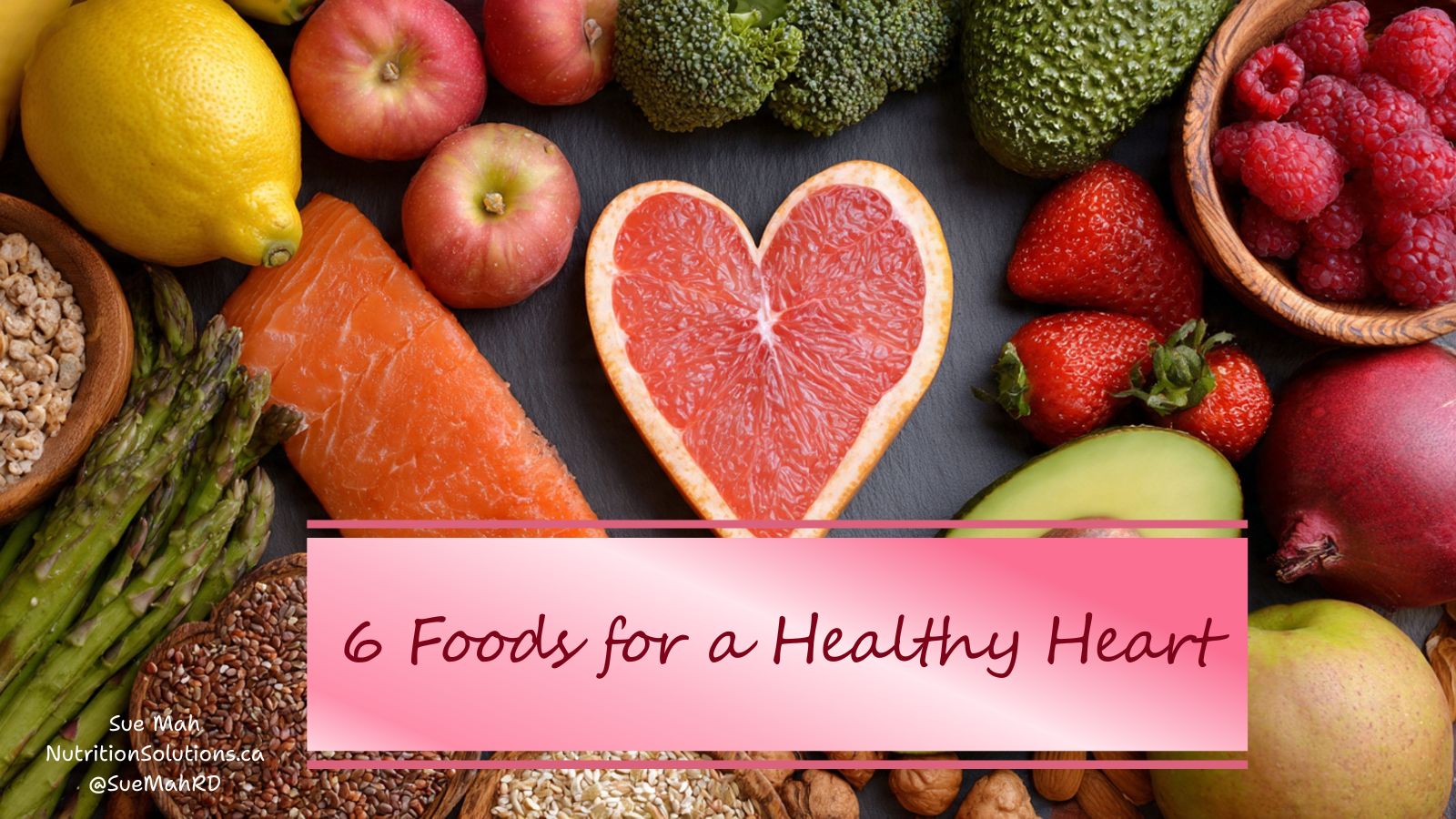
A variety of heart healthy foods such as salmon, apples, broccoli, grapefruit and berries.February is Heart Month! According to the Heart and Stroke Foundation of Canada, 9 out of 10 adults have at least one risk factor for heart disease. The good news is that eating the right foods can keep your heart healthy.

Whole grains
Barley and oats specifically contain a special type of fibre called beta-glucan. This type of fibre has been shown to lower blood cholesterol which is important since high blood cholesterol is a risk factor for heart disease. The beneficial amount is 3 grams of beta-glucan fibre which is found in 1 cup of cooked barley or 1½ cups of cooked oatmeal.

Try these recipes:

Beef and Barley Soup

Hearty Morning Oatmeal


Nuts

Research shows that eating about 1.5 to 3.5 servings of nuts 5 times or more per week can also lower the bad LDL (low density lipoprotein) cholesterol. All nuts have high proportions of healthy fats – these are called monounsaturated and polyunsaturated fats – and it’s these fats which help to reduce our cholesterol levels. Nuts are packed with nutrition like protein, vitamin E, selenium, folate and even calcium but the calories do add up, so keep in mind that a portion size is about ¼ to 1/2 cup. One easy way to eat more nuts is to eat them as a snack. Or you can easily add nuts to your oatmeal, in your baking recipes or in a stir-fry.

Beans

Plant-based foods such as beans can boost heart health. Beans are low in fat, packed with fibre and a great protein option.  A serving is only 1/2 cup of cooked beans. Enjoy them in soups, salads, and wraps.

Try this recipe: Black Bean, Corn and Avocado Salad

Soy protein

About 20-25 grams of soy protein helps to lower blood cholesterol levels. Plus soy protein is a great vegetarian protein. To get this amount of soy protein, try any one of these options:
– ¾ cup cooked tofu or
– ¾ cup cooked edamame beans or
– 1 cup fortified soy beverage with ¼ cup roasted soy nuts

Fish
Fatty fish such as salmon, rainbow trout, artic char, mackerel and sardines are super sources of heart healthy omega-3 fats. These omega-3 fats can reduce inflammation and blood clotting. Aim to fish at least twice a week. A serving is 75 g of cooked fish or about the size and thickness of your palm.

Try this recipe: Salmon Chowder

Veggies and Fruit
You can’t go wrong eating more fruit and veggies. Fruit and veggies are superstars for fibre, vitamins, minerals and antioxidants which protect us from not just heart disease but other health conditions too such as high blood pressure, cancer and diabetes. As a general rule, try to have 1-2 servings of veggies or fruit at every meal and snack. Or just think of filling half your plate with veggies and fruit at every meal!

Try this recipe: Sautéed Mushroom and Spinach Salad

Your Glass of Milk Now Contains More Vitamin D

A glass of milk

This article was originally written as a paid partnership with Canadian Food Focus and  appeared on their website.

Did you know that the amount of vitamin D added to some foods is changing?

Vitamin D is one of the key nutrients for bone health. We need between 15-20 micrograms (600-800 IU) of vitamin D every day. Yet, according to Health Canada, 1 in 5 of us aren’t getting enough vitamin D.[1] To help prevent deficiency, Health Canada published new regulations for vitamin D fortification in foods. These new regulations increase the amount of vitamin D that can be added to foods.

What is Fortification

Fortification is a process by which vitamins, minerals and / or amino acids are added to foods.[2] This helps consumers get sufficient, but not too much of certain nutrients in their diets. The Food and Drugs Regulations outline which foods are required or allowed to be fortified. In Canada, we have mandatory fortification and voluntary fortification.

  • Mandatory fortification: For some foods, fortification is mandatory and the foods cannot be sold unless they contain specific amounts of certain vitamins, minerals and / or amino acids. For example, cow’s milk has been mandatory fortified with vitamin D since 1975 as a strategy to prevent rickets.[3]
  • Voluntary fortification: For other selected foods, such as goat’s milk and yogurt, fortification is voluntary. Food companies can choose to add approved vitamins / minerals and / or amino acids to these products. If so, only specific amounts can be added.

New Fortification Rules for Vitamin D

The Food and Drugs Regulations were amended in 2022 to change the amounts of vitamin D added to foods. The amount of vitamin D that must now be added to cow’s milk and margarine is almost double the previous allowed amount. Food companies must make these changes by December 31, 2025.

Goat’s milk and fortified plant-based beverages are often consumed as alternatives to cow’s milk. For this reason, the amount of vitamin D added to these beverages is allowed to be the same amount as that added to cow’s milk. Vitamin D fortification is still voluntary for goat’s milk and fortified plant-based beverages.

Few foods contain vitamin D, so Health Canada has expanded the list of foods which can be voluntarily fortified with vitamin D. Since June 2024, yogurt, yogurt drinks and kefir made from dairy can be fortified with vitamin D in different amounts.

See below for the amount of vitamin D fortification allowed in different foods and beverages.

Amount of Vitamin D Fortification in Foods and Beverages

Cow’s milk: 2 ug per 100 mL (which is 5 ug per 250 mL or 1 cup)

Goat’s milk: 2 ug per 100 mL (which is 6 ug per 250 mL or 1 cup)

Plant-based, fortified beverages: 2 ug per 100 mL (which is 5 ug per 250 mL or 1 cup)

Yogurt, made from dairy, plain: 5 ug per 100 g

Yogurt, made from dairy, fruit or flavoured: 3.8 to 5 ug per 100 g

Yogurt drinks, made from dairy, plain: 5.2 ug per 100 mL

Yogurt drinks, made from dairy, fruit or flavoured: 3.9 to 5.2 ug per 100 mL

Kefir, made from dairy, plain: 2.7 ug per 100 mL

Kefir, made from dairy, fruit or flavoured: 2.3 to 2.7 ug per 100 mL

Margarine, including calorie-reduced margarine: 26 ug per 100 g

Notes:

  1. For foods, vitamin D is measured in micrograms (µg). For supplements, vitamin D is measured in International Units (IU).
  2. 1 µg = 40 IU

What You Can Do

Foods are fortified with vitamin D to help prevent deficiency. Read the information on food labels to check the vitamin D content of foods. Even with more vitamin D in milk and other foods, you may still need to take a supplement. Talk to your health care provider about the amount of vitamin D supplement you may need. For example, if you’re over the age of 50 years, Health Canada recommends taking a vitamin D supplement of 400 IU every day.


References

[1] Health Canada (2025 September 3). Canada’s Vitamin D Fortification Strategy.  https://www.canada.ca/en/health-canada/services/fortified-food/canadas-approach.html Sourced 2025 November 24.

[2] Canadian Food Inspection Agency (2025 January 15). Fortification of food. https://inspection.canada.ca/en/food-labels/labelling/industry/fortification Sourced 2025 November 24.

[3] Health Canada (1999) The Addition of Vitamins and Minerals to Foods: Proposed Policy Recommendations. https://publications.gc.ca/Collection/H58-1-2-1999E.pdf Sourced 2025 November 24.


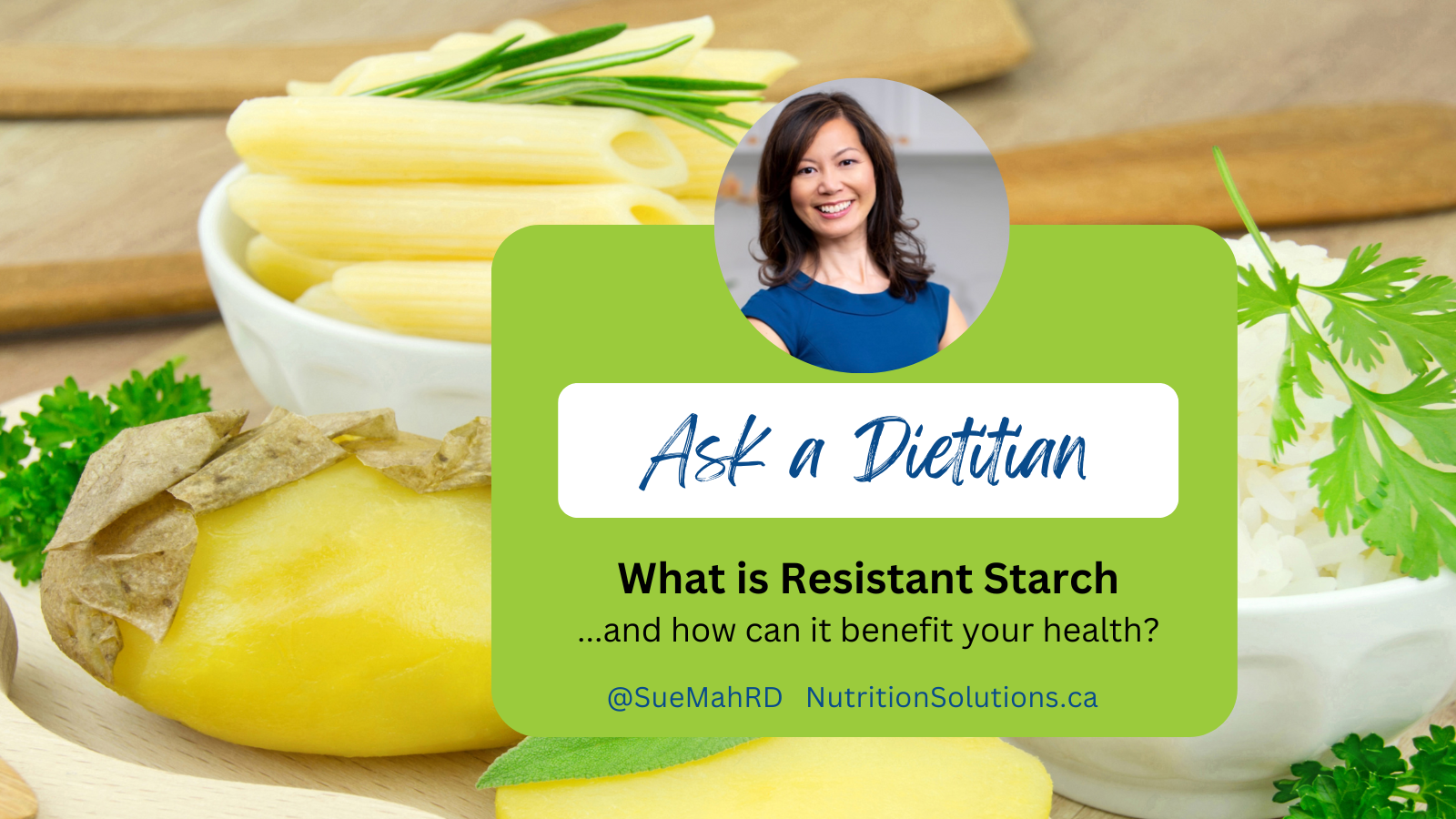
Ask a Dietitian: What is Resistant Starch…and how can it benefit your health?

Text on a backdrop image of cooked pasta, cooked potatoes and cooked riceResistant starch is a type of fibre that resists digestion in the small intestine, and it can have health benefits.

One way to create resistant starch is to cook and then cool / refrigerate certain types of carbohydrates, such as potatoes, pasta and rice. This process (called “retrogradation”) changes the structure of some of the original starch to create a resistant starch that doesn’t get digested. The amount of resistant starch doesn’t change significantly when the food is reheated.

Here are a few health benefits of resistant starch:

  • Blood sugar control: Usually, starchy carbohydrates are digested and broken down into glucose which can raise your blood sugar levels. Since resistant starch is not digested, it doesn’t have this effect, so it can be beneficial for controlling your blood sugar levels.
  • Gut health: Resistant starch travels to the large intestine where it acts as food for the good bacteria in our gut. In other words, resistant starch is a prebiotic! When the resistant starch is fermented in the large intestine, it produces beneficial, short chain fatty acids.
  • More gut health: Since resistant starch is fermented slowly in the large intestine, it may cause less gas and bloating than other fibre-rich foods.
  • Satiety: Eating foods with resistant starch can help you feel full for longer.

Here’s what you can do:

  • Pasta: Cook pasta to al dente. Once cooled, store the pasta in the refrigerator. The longer it is refrigerated, the more resistant starch is formed. Eat the pasta cold in a pasta salad like my Caprese Pasta Salad, add to a soup, or reheat the pasta and enjoy it with a sauce. Bonus tip: Cook pasta to al dente – it will have a lower glycemic index than mushy pasta and create a slower rise in your blood sugar levels.
  • Potatoes: Boil, roast or bake the potatoes. When cool, store the potatoes in the refrigerator for at least a few hours, preferably overnight. Eat the potatoes cold in a potato salad or reheat them in your favourite recipe.
  • Rice: Cook rice as you normally would. Allow the rice to cool at room temperature and then refrigerate for at least 12 hours. Use the rice to make Best Shrimp Fried Rice or simply enjoy the reheated rice as a side dish. The amount of resistant starch does not change much after reheating cooked and cooled rice, pasta or potatoes.


Research Recap: Surprising Findings about Grocery Flyers in Canada

A red grocery basket filled with foods in a grocery store aisleDo you look at grocery flyers? If yes, the findings of a recent Canadian study may surprise you!
Background

A group of researchers from Saint Mary’s University, Dalhousie University and the University of Waterloo looked at 53 grocery flyers from both discount and regular banner stores across Canada in 2014, 2017 and 2021.

The flyers were collected at least twice each year and not during calendar holidays such as Halloween, Christmas, Valentine’s Day or Easter since theme-related foods tend to be advertised at these times.

In total, 8790 foods and beverages were reviewed for their nutritional quality.

What the study found

Baked products were the largest category of foods advertised in food flyers, making up on average 11% of the entire flyer. Next were non-alcoholic beverages (excluding milk) at 10.7% and then milk / dairy products at 10.2% of the total items found in the flyers.

Vegetables and fruits only comprised 8.3% and 6.5% respectively of the foods advertised in the flyers. Meat products came in at 7.2% and snacks at 5.1%.

When reviewing the nutritional value of the foods / beverages in the flyer, more than half of the items advertised were considered ultra-processed and did not align with Canada’s Food Guide. About one-third of the items in the flyer were unprocessed or minimally processed.

Interestingly, the foods items shown on the flyer cover page were consistently more likely to follow the advice of Canada’s Food Guide. This observation was noticed in both discount and regular banner store flyers located in Ontario, Quebec and Atlantic Canada, but not for Western Canada. (The research authors didn’t explain why this wasn’t noted in Western Canada.)

The bottom line

This was the first nationwide observational study of grocery flyers in Canada and the first to analyze multiple years of flyer data.

As a dietitian, I often suggest planning your weekly meals based on the foods that are on sale. Since the healthier foods are typically found on the first page of the flyer, spend more time looking there and then scan the rest of the flyer for additional items to round out your grocery list.


Research cited: Alisson Dykeman MAHSR, Gabriella Luongo PhD, Leia Minaker PhD, Emily Jago MHK, and Catherine L. Mah MD, PhD . Ultra-processed Foods Frequently Promoted in Canada’s Grocery Flyers from 2014, 2017, and 2021, with Healthier Cover Pages. Canadian Journal of Dietetic Practice and Research (2025, July 14). https://doi.org/10.3148/cjdpr-2025-017

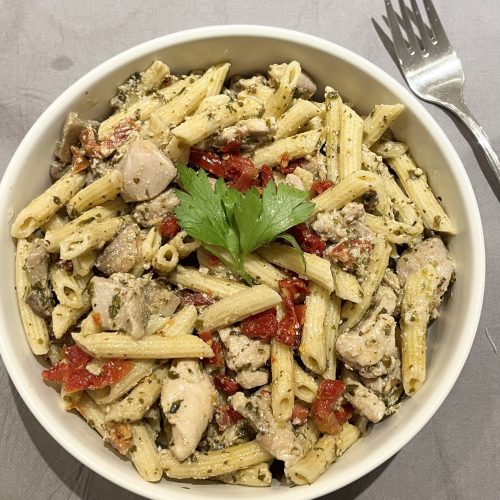
Chicken Pesto Pasta


Chicken Pesto Pasta

A hearty meal made with savoury pesto sauce and a chef's tip for the most tender chicken ever! Recipe by Sue Mah, NutritionSolutions.ca
Course Dinner
Servings 6

Ingredients
  

  • 1 lb chicken (about 4-5 chicken thighs or 2 chicken breasts), cut into 1-inch pieces
  • 2 tsp light soy sauce
  • 1 1/2 tsp cornstarch
  • 3 tbsp canola oil, divided (1 tbsp + 2 tbsp)
  • 2 cups sliced mushrooms (about 6-8 large mushrooms)
  • 1 box 410 grams of dried pasta (e.g. penne, farfalle, rotini, gemeilli) [Or substitute with about 7 cups cooked pasta]
  • 1 cup pesto [For convenience, I use store bought jars of De Cecco Pesto (not sponsored)]
  • 1/3 cup sundried tomatoes, drained, sliced
  • salt and pepper to taste
  • fresh basil or parsley for garnish

Instructions
 

  • Prepare the chicken: Add the diced chicken to a bowl. Season with soy sauce and cornstarch. (This is a tip I learned from my chef Dad. The cornstarch and soy sauce help to tenderize the meat. Cornstarch also keeps the meat soft and velvety.) Toss to coat and allow to rest while cooking the pasta and mushrooms.
  • Cook the pasta: Cook pasta according to pasta directions. Reserve 1/2 cup of the cooking water. Drain the pasta, cover and set aside.
  • Cook the mushrooms: Heat 1 Tbsp oil in a large skillet over medium high heat. Sauté the mushrooms for a few minutes. Add salt and pepper to taste. Toss the mushrooms and continue cooking until lightly browned. Remove from pan.
  • Cook the chicken: Heat the remaining oil in the skillet. Add the chicken and cook, stirring occasionally for 7-8 minutes or until the internal temperature reaches 165 F.
  • Make the meal: Turn heat to medium low. Toss pasta and mushrooms into the skillet and toss with the chicken. Stir in the pesto sauce until pasta is heated throughout. Toss in the sundried tomatoes. Add a splash of reserved cooking water or oil from sundried tomatoes if needed or if the pasta seems dry. Season with salt and pepper to taste. Garnish with fresh basil or parsley.
Keyword Chicken Pesto Pasta, Chicken recipes, Pasta, Pesto Pasta

4 Do’s and Don’ts When Eating in Japan

Sue standing in Nishiki Market, Kyoto JapanI had a wonderful trip to Japan, travelling through Tokyo, Kyoto, Osaka and Kobe! Of course as a dietitian, I spent most of my time on the food scene. When it comes to food and eating, here are 4 do’s and don’ts I discovered on my trip.

DO explore the local food markets

Each of the big cities have busy food markets with many signature local delights. At the Nishiki Market in Kyoto, I tried premium matcha ice cream (delicious!) and Takoyaki (deep fried octopus balls – overrated, in my opinion). And in Tokyo’s Tsukiji Market, I lined up for tamagoyaki (Japanese omelet on a stick – totally worth the wait!) and strawberry daifuku (a pretty dessert made of mochi but a little too sweet for me).

DON’T eat on the go

Eating while walking is a big no-no. At the food markets, signs are actually posted asking patrons to eat their food inside or just outside of the store. Eating on local trains is also discouraged. However, eating and drinking are allowed on long distance Shinkansen bullet trains. I also noticed no public garbage cans on the streets, in hotel lobbys or even in the train stations. The unspoken rule is to simply carry all of your trash with you. All of these efforts help to keep the city super clean.

A sign posted outside the market.


DON’T expect too many fruits or veggies

I researched quite a bit for my trip to Japan, but honestly, nobody mentioned the lack of fruits and veggies at meals. My typical fare consisted of sushi, ramen, udon noodles and sukiyaki – lots of delicious starch with fish or meat – but veggies were notably absent. A couple of times, I treated myself to a seven course chef’s choice meal (“omakase”) and was delighted to finally see some veggies, albeit half an asparagus spear or a single baby corn as a garnish.

Sue holding a small spear of asparagus with a plate of grilled scallops


DO visit the convenience stores

On practically every corner of the city, there’s at least one convenience store. Whether it’s a Family Mart, Lawson’s or 7-11, these stores carry a variety of healthy, affordable options – including sliced fruit in pouches and mini broccoli edamame salads. I fell in love with the ham and lettuce sandwiches (emphasis on the lettuce!) and the red bean buns which were perfect snacks. There was also Greek yogurt and high protein milk to help me reach my daily calcium goals.

Are you planning a trip to Japan soon? Let me know in the comments and I’d be thrilled to suggest some fun food workshops and delicious restaurant options!


Ask a Dietitian: Can Kiwis Help with Constipation?

Headshot of Sue and a bowl of kiwis in the backgroundYes! You’ve heard of the saying, “An apple a day keeps the doctor away!” But, if you experience constipation, the advice can be changed to “Two kiwis a day keeps the doctor away!”

The research study

Research published in the American Journal of Gastroenterology studied two groups of adults with either functional constipation or IBS-C (Irritable Bowel Syndrome – constipation predominant). The adults were randomly assigned to eat 2 green kiwis every day or 7.5 grams of psyllium powder every day for 4 weeks. Psyllium is a type of soluble fibre known to help alleviate constipation as well as reduce blood cholesterol levels. The amount of fibre from the kiwis and psyllium was the same – 6 grams.

After this 4 week period, both groups returned to their usual diets for 4 weeks. Then, the groups switched around and ate the other test food – in other words, the group that started off eating kiwis now ate psyllium every day for 4 weeks, and vice versa.

The results

Both kiwis and psyllium improved constipation. When eating kiwis, the participants experienced an increase of over 1.5 “complete spontaneous bowel movements” (CSBM) per week. As a reference, an increase of 1 or more CSBM per week is considered clinically relevant for improving constipation. Furthermore, kiwi eating participants reported less bloating and straining after eating kiwis when compared to psyllium.

How do kiwis work?

There are a couple of reasons why kiwis have this beneficial effect. For starters, the fibre in kiwis has a higher swelling and water holding capacity than other fruits. In fact, the swelling ability of kiwi fibre is more than 6 times higher than apple fibre! Since kiwis can help retain more water in the small intestines, this helps to increase bulk and soften the stools as well as increase stool frequency.

In addition, kiwis contain a special enzyme called actinidin which seems to speed up the digestion of proteins and keeps things moving in the gut for more regular bowel movements.

The bottom line

Kiwis (green or gold) can be a helpful food to help ease constipation. If your constipation is persistent, please contact a registered dietitian for specialized advice.


References:

Eltorki M, Leong R & Ratcliffe EM, 2022. Kiwifruit and kiwifruit extracts for treatment of constipation: a systematic review and meta-analysis. Can J Gastroenterology & Hepatology 2022, Oct 6:2022:7596920; doi: 10.1155/2022/7596920.

Gearry R, Fukudo  Shin, Giovanni B et al., 2023. Consumption of 2 green kiwifruits daily improves constipation and abdominal comfort—results of an international multicenter randomized controlled trial. The American Journal of Gastroenterology 118(6):p 105. doi: 10.14309/ajg.0000000000002124.

Wilkinson-Smith V, Dellschaft N, Ansell J et al., 2019. Mechanisms underlying effects of kiwifruit on intestinal function shown by MRI in healthy volunteers. Alimentary Pharmacology & Therapeutics, 2019 Jan 31;49(6):759-768. doi: 10.1111/apt.15127

10 Ways to Eat Better for the Planet

A tiny plant sprouting from the earth.April 22 is Earth Day! Here are 10 easy ways to eat better for the planet – today and every day!

1. Make a no-cook meal
. Try a yogurt parfait with granola and fruit on top. Pack a peanut butter sandwich for lunch. For dinner, how about a leafy green salad with grated carrots, cucumbers, tomatoes and canned fish (dig out that manual can opener from the bottom of your drawer instead of using an electric one).

2. Join the Meatless Monday movement. More energy is typically needed to produce meat compared to grains, legumes, fruit and veggies. Try a meatless meal at least once a week, like my Bean, Avocado and Corn Salad, Chickpea Lettuce Wraps, BBQ Tofu Burger or Lentil Bolognese.

3. Steam your food. You’ll conserve water by steaming rather than boiling. And here’s the nutritional bonus: steamed veggies stay tender crisp and very little vitamins and minerals are lost in the cooking water.

4. Multi-purpose your water.  I used to warm up the kids’ thermoses with hot water as I made their lunches. Instead of dumping all that water down the drain, I re-purposed the hot water to make a nice pot of green tea. Do you have “leftover” water in your kettle? Cook with it. Wash your dishes with it. Pour it into a pitcher and refrigerate it – now you don’t have to run the tap when you want a glass of cold water!

5. Reduce food waste. The food that we toss out can end up in landfills where it decomposes and produces methane gas, contributing to climate change and global warming. So buy only what you need. Store food properly, use leftovers creatively and freeze any extra food. Use all parts of the animal and vegetable whenever possible. My dad makes an incredible soup with pig’s feet! One of my all time favourite veggies is beets because I can use practically everything from root to leaf!

6. BYOC. Bring your own containers. If you’re going out for dinner, bring your own food containers for leftovers. Some coffee shops may also allow you to bring a reusable mug for take-out beverages.

7. Buy from the bulk store. It will help you buy only what you need. Plus it cuts down on all that unnecessary food packaging. Ask the store if you can bring in your own containers too so that you don’t have to use as many plastic bags.

8. Reduce your “cookprint”. Your cookprint is the amount of energy that’s needed to prepare and cook your meals. Speed up your cooking time and dial down your energy use by keeping the lids on pots. Use smaller, energy efficient appliances like a toaster oven, air fryer, pressure cooker or crockpot.

9. Be a locavore. Eat locally grown food whenever you can because it helps reduce the transportation and carbon footprint from farm to plate. Build on this idea and think about your own transportation when buying groceries. Can you walk, cycle or take transit to get your groceries?

10. Grow your own. Gardening season is right around the corner. Get outside, dig into the soil, and get planting! On my list this year are cherry tomatoes, herbs and you guessed it – beets! You’ll love the taste of home grown produce and Mother Earth will thank you for it too!

Test Your Caffeine IQ!

A person holding a mug with their left hand and using their right hand to type on a laptop keyboard.Disclosure: This post was sponsored by the Canadian Beverage Association, and I have received monetary compensation. As always, my own professional opinions and views are expressed.

Did you know that March is Caffeine Awareness Month? It’s a good time to check in on your intake and understand how to find caffeine in foods and drinks. Take this short caffeine quiz and let me know if you discovered new information!

Question #1: True or False? The maximum daily intake of caffeine for adults is the amount found in 5 cups of coffee.

Answer: False

According to Health Canada, most adults can consume up to 400 mg of caffeine per day from all sources. This is actually equivalent to about 2-3 small cups of brewed coffee (237 ml sized cups). If you’re sensitive to caffeine, you may need to consider a lower amount of caffeine. Note that people who are pregnant, trying to become pregnant or breastfeeding should limit caffeine intake to no more than 300 mg per day.

Caffeine can be found in a variety of foods and drinks. See the chart below for the caffeine content of some common sources.[1],[2]

A chart showing the caffeine content of various foods and beverages


Question #2: True or False? Natural caffeine has different properties than synthetic caffeine. 

Answer: False

You might be surprised to learn that both natural and synthetic caffeine have the same structural and physiological properties. Naturally occurring caffeine is found in plant-based foods such as coffee beans, tea, cocoa, chocolate, kola nuts, guarana berries and yerba mate. Synthetic caffeine can be added to different products like energy bars, energy drinks and soft drinks. Caffeine is caffeine, whether it’s natural or synthetic, and the effect on the body is the same.

The molecular structure of caffeine


Question #3:  True or False? Foods and beverages with higher levels of added caffeine will show the caffeine amount on the label.

Answer: True

Foods or beverages with higher levels of added caffeine are considered “supplemented foods.” Health Canada has developed new labelling guidelines for supplemented foods which will list the amount of caffeine per serving. By January 1st, 2026, all supplemented foods must show a Supplemented Food Facts table, and you may already see this information on food packages now.

The Supplemented Food Facts table looks similar to a Nutrition Facts table found on packaged foods. You’ll find information about the serving size, calories and different nutrients. In addition, the table includes a section called “Supplemented with” which lists all of the supplemental ingredients found in the product. The maximum amount of caffeine that can be added to a supplemented food or drink is 180 mg per single serving. In the example below, you can see that 1 can of this beverage contains 170 mg of caffeine.

A Supplemented Food Facts table for an energy drink. A caution identifier and caution box with information about who should not consume the product.


Supplemented foods can contain certain ingredients that should not be consumed in excess by the general population or consumed by those who are pregnant, children or other vulnerable groups. For this reason, some supplemented foods will also show a caution identifier as well as a caution box with additional information to help you decide if the product is right for you.

Question #4: True or False? Caffeine can improve exercise performance.

Answer: True

When taken before exercise, caffeine has been shown to reduce our perception of fatigue and can help us maintain our sports performance and endurance for a longer time.[3] Research shows that caffeine can be beneficial for people and athletes who engage in endurance aerobic types of activities such as running, cycling, cross-country skiing or swimming as well as activities like sprinting and jumping.[4]

Question #5: True or False? Caffeinated beverages are dehydrating.

Answer: False

Caffeine does have a mild diuretic effect so you may feel the need to urinate more often. However, remember that caffeinated beverages are mostly water, so the liquid you lose is usually offset by the amount you’re drinking. A good general way to tell if you’re dehydrated is to look at the colour of your urine. If your urine is lightly coloured, then you’re likely hydrated. If it’s dark yellow, then you may be dehydrated and it’s a good sign to get more fluids from beverages, soups, fruits and vegetables.


References:

[1] Health Canada 2022. Caffeine in Foods. Table: Average amounts of caffeine in food and drink, Health Canada: https://www.canada.ca/en/health-canada/services/food-nutrition/food-safety/food-additives/caffeine-foods.html

[2] Starbucks 2025 – “Short” 236 ml Dark Roast contains 155-195 mg caffeine https://www.starbucks.ca/menu/product/479/hot/nutrition.

[3] Nutrition and athletic performance. Position paper of Dietitians of Canada, Academy of Nutrition and Dietetics and the American College of Sports Medicine (2016). https://www.dietitians.ca/DietitiansOfCanada/media/Documents/Resources/noap-position-paper.pdf?ext=.pdf

[4] Guest, N.S., VanDusseldorp, T.A., Nelson, M.T. et al. International society of sports nutrition position stand: caffeine and exercise performance. J Int Soc Sports Nutr 18, 1 (2021). https://doi.org/10.1186/s12970-020-00383-4 https://jissn.biomedcentral.com/articles/10.1186/s12970-020-00383-4


Hearty Morning Oatmeal

A bowl of cooked oatmeal topped with hemp seeds, walnuts, bran cereal, blueberries and raspberries.

A bowl of cooked oatmeal topped with walnuts, hemp seeds, bran cereal, blueberries and raspberries. The bowl is on a yellow towel with a yellow spoon.

Hearty Morning Oatmeal

This hearty breakfast is packed with cholesterol-lowering ingredients like oats, walnuts, hemp seeds, bran cereal and fresh berries.
5 from 1 vote
Course Breakfast
Servings 1

Ingredients
  

  • 1/3 cup quick cooking oats
  • 1 cup skim milk
  • 1 tsp brown sugar (optional)
  • 2 tbsp All Bran Buds cereal
  • 1/4 cup walnuts
  • 1 Tbsp hemp seeds
  • 1 cup fresh or frozen berries
  • 1 scoop collagen powder (optional)

Instructions
 

  • Add oats and milk into a microwave safe bowl. Microwave for 1 1/2 to 2 minutes or follow package directions.
  • Stir in brown sugar and collagen powder (all optional).
  • Add toppings - walnuts, hemp seeds, Brazil nut, bran cereal and berries.

Notes

1. This recipe provides about 21 grams of protein and 11 grams of fibre. With a scoop of collagen, the protein is increased to 31 grams.  Adults need between 21-38 grams of fibre every day. 
2. All Bran Buds cereal (different from All Bran) contains psyllium - a special type of fibre shown to lower blood cholesterol levels. 
Keyword berries, breakfast, cholesterol, heart health, hearty morning oatmeal, nuts, Oatmeal, oats, seeds

Love to learn? Love to eat?

Sign up for my free nutrition news, tips, trends, recipes and fascinating food facts!